A pastoral comparison of Christianity and Buddhism that grants their surface similarities but argues they diverge at the core: going up versus coming down, effort versus grace, and self versus no self. Appreciating Buddhism is fine, but blending the two ignores what each actually claims.
Transcript
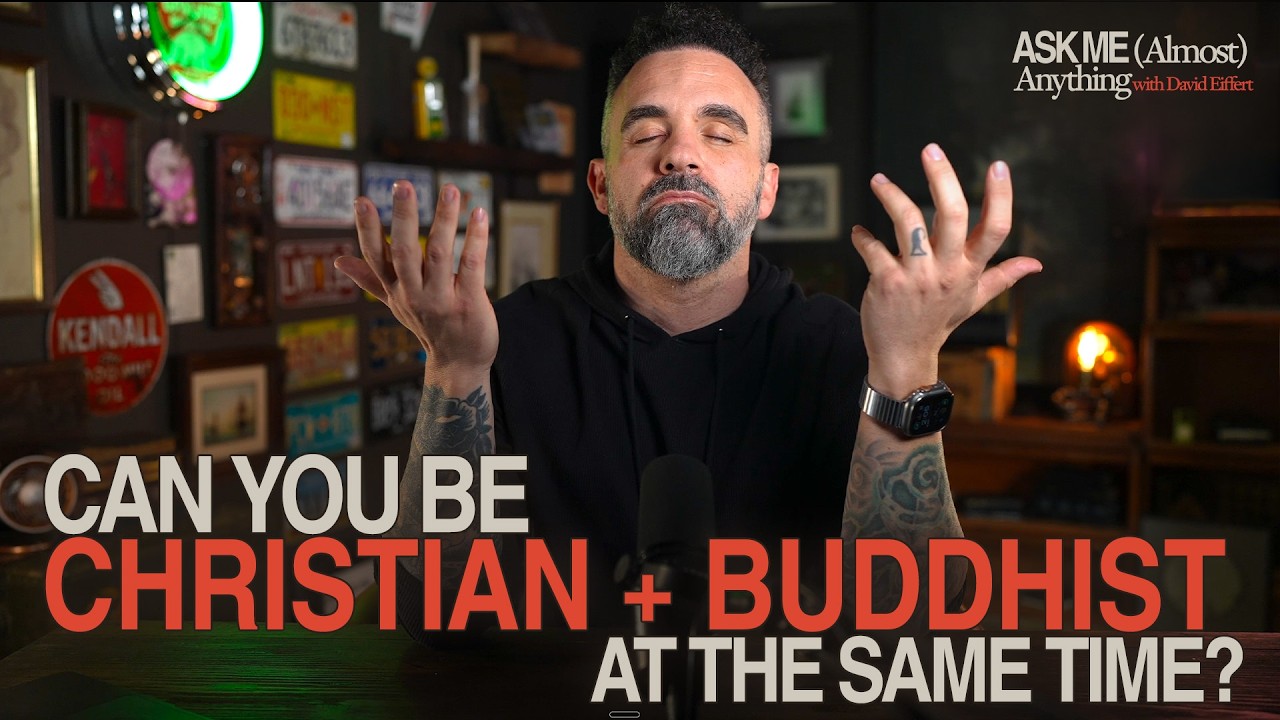
Can you be a Christian and a Buddhist at the same time?
Well, a lot of people think so, and I get why, because there is a lot that is beautiful about Buddhism. So mindfulness, compassion, simplicity. They both share this idea of meditation. And when you put Jesus and Buddha side by side, the similarities are in fact kind of amazing. They both began their missions in their early 30s. They both called disciples, they both challenged the religious establishment, they both valued compassion, they both valued peace.
So a lot of people will see both Christianity and Buddhism and think, well, maybe these are just two paths up the same mountain. But here’s what’s interesting is that the Dalai Lama, y’all remember that guy, he even he says you can’t be both. And I think he’s right. I remember years ago I saw a video of these ex-Christians who had converted into Buddhists. And they said, they said, Buddhism teaches a way of life. Christianity gives a list of stuff to believe.
And I’ll say that they’re not totally wrong in that that’s how a lot of churches present the faith. Like, here’s a checklist of doctrines, and you’ve got to sign off and like welcome to the club. But they’re wrong, though, in what Jesus actually taught. Jesus didn’t hand out theology exams. Jesus said, follow me, and he lived out the way in front of people. And I think culturally, especially in the West, there’s a lot of people who identify as Buddhist, but I really think they’re maybe like Buddhist-ish. They like the meditation apps, they like the aesthetic, they like the Buddha statue in the garden, but they’re not really engaged in Buddhism in a doctrinal level.
Where these two traditions diverge
And that’s fine, but to call yourself a Christian Buddhist, I think that whole crowd is maybe blending two things together that they don’t totally understand. And I want to talk about where these two traditions diverge. So some people will say that Buddhism and Christianity, they look different on the outside, but on the inside, they’re really the same thing. And I think it’s really the exact opposite that both traditions they have similarities on the surface, but when you look under the surface, they couldn’t be more different.
Going up versus coming down
Let me give you three examples. Number one, I’m gonna say going up versus coming down. What does that mean? So Buddha is what we would call an ascended master. He was born as a regular human, and through effort and meditation and discipline, he achieved enlightenment. So he figured it out. He started at the bottom and he climbed his way to the top.
Jesus, though, is the exact opposite. Jesus didn’t have to figure anything out. In fact, Jesus comes from somewhere else entirely. Paul in Philippians chapter two says that Jesus being in his very nature, God, emptied himself to become one of us. And so Jesus, it’s not like he started here and he found his way to the top. Jesus started at the top and he came down to us.
Plato, who you probably are familiar with, he has the analogy of a cave, and he says that Buddhism is like Buddha starts on the inside of the cave with the rest of us, and he finds his way out, and then he comes back to tell us about it. Christianity, though, is the exact exact opposite that Jesus claims to have come from outside of the cave, and so he’s not peeking out of the cave. He starts outside of the cave, but he comes into the cave to help us. And that’s a fundamentally different claim.
Buddhism says you can climb your way up to the divine, but Christianity says that God came down to you. It’s totally different. Going up versus coming down.
Effort versus grace
Number two is effort versus grace. I want you to hear this. Buddha’s last words to his disciples was this strive without ceasing. Jesus’ last words on the cross is it is finished. Sit with that for a second.
So Buddhism says dedicate your entire life to the practice, become a monk, meditate for four hours every day, detach from desire, and you might over many lifetimes achieve the divine. And we can live from this place of rest. There’s nothing left for you to achieve. And so everything in the Christian faith isn’t it’s not a I have to, it’s a I get to. And salvation isn’t a finish line that we achieve down the road. It’s a reality that we get to live in right now. That’s not a minor stylistic difference. That’s the whole operating system.
Self versus no self
So going up versus coming down, effort versus grace, number three is self versus no self. And this is where it gets a little philosophical, but I want you to stay with me because this is important. So Buddhism talks about anada, which is means no self. And Buddhism teaches that the individual identity, the thing that you think of when you think of you, is ultimately an illusion, that you’re just a big bundle of constantly changing processes. And the goal is to let go of the illusion of the separate self.
And so their concept of nirvana, it’s not some blissful heaven. Nirvana is more like a flame going out. That’s their words, not mine. Where the suffering stops and the sense of you goes away. Christianity, though, is the exact opposite. Christianity teaches that you are a distinct, beloved person, known by God, loved by God. And so salvation doesn’t dissolve you, it restores you where you’re more fully yourself, not less.
So Christianity and Buddhism certainly agree on this that the idea of, you know, get more stuff, chase more pleasure, build a bigger life, that that’s what the world says. They both agree that that’s crazy and doesn’t work. They both see through that. But their solutions to that problem are the exact opposite. See, Buddhism says that the problem is desire itself. So you have to extinguish it. Christianity says the problem is not desire, but disordered desire. And what you have to do is not get rid of desire, but you have to reorder your desire around something worth loving.
Going up versus coming down, it’s totally different. Effort versus grace, it’s totally different. Self versus no self, it’s totally different.
Two completely different mountains
So, can you be Christian and Buddhist at the same time? Well, let me say this. I think you can deeply appreciate Buddhism. You can learn from its mindfulness and its meditation and its compassion and its simplicity. But to say you’re both, I think is to ignore what each of them claims at its core. Buddha says you have to strive your way to enlightenment. Jesus says, I’ve come to bring it to you. That’s not two paths up the same mountain. Those are two completely different mountains. And I think acknowledging that is actually the most respectful thing you can do for both.
And so you might be thinking, well, what does Jesus and Buddha actually agree on? Well, that’s another question.