A recovering deconstructionist's case that what's often called deconstruction isn't truth-seeking but truth-avoiding - sidestepping accountability, replacing the authority of Scripture with the authority of self, and treating endless questions as a destination. The healthier path is reformation: honest wrestling that returns to Scripture instead of dismantling faith.
Transcript
A Recovering Deconstructionist
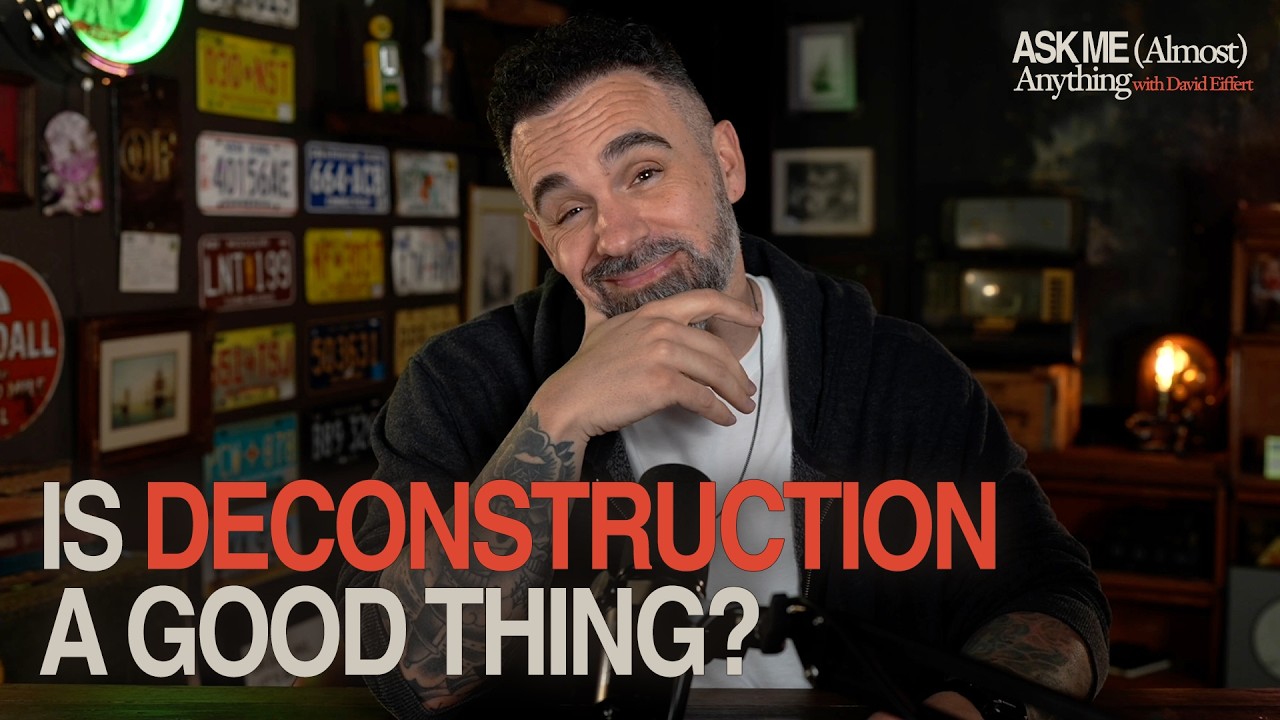
Is deconstruction a good thing? Well, before I answer that, I have a confession, and it’s this that I am a recovering deconstructionist. I’m in recovery. So I’m on, well, I don’t know, step eight. What are those steps? First is denial, acceptance. What are the other ones? Asking for forgiveness. I’ve definitely done that one. And I have since returned to what I would say is probably a more historical and orthodox understanding of what it means to be a follower of Jesus.
Point is though, when it comes to deconstruction, I’ve lived on both sides of it. And I want to say, of course, that I understand the appeal of deconstruction. Like to take time to understand what you really believe and to ask real questions. All of that to me, it’s not just fine, it’s actually a good thing. But for me, when most people use the word deconstruction, I think they’re talking about something different.
The Appeal and Issue with Deconstruction
And I want to say that I so love my deconstructed brothers and sisters. Much love. I love them, love them, love them so, so, so, so much. But I think that for a lot of people, what’s happening is they just lack the courage to say what’s really happening, that they’re not deconstructing the faith, they’re just leaving it. And for me, I’d rather people just say they’re leaving the faith than just trying to like tiptoe around, trying not to hurt people’s feelings.
And so my issue with deconstruction, I think as most people define it, is this is my belief. I think it’s not about finding truth, and it’s more about leaving the idea of there being truth. And that might sound harsh, I don’t want to sound mean, and I want to be fair because there’s like real people with real wounds behind real stories. But as someone who’s been there, I can just say that I think there’s something else going on.
What is Deconstruction?
And so if you’re not familiar with the term deconstruction, that’s a word that people will use when they’re rethinking or maybe even leaving the faith. And the word is everywhere. So there’s deconstruction podcasts and there’s deconstruction coaches and there’s deconstruction conferences. And to be clear, in my opinion, asking hard questions is not deconstruction. I think asking hard questions is just being like a thoughtful person.
And it’s something actually that we’re encouraged to do in the Bible. In the book of Acts, I think it’s Acts chapter 17, there’s these people called the Bereans, and they’re actually praised by Paul. They’re complimented by Paul for examining scripture to see if what’s being taught is true. You know, questions are not a sin. And because the church is comprised, the local church is comprised exclusively of imperfect people, a lot of the grievances that they have against the church are totally legitimate, like real spiritual abuse, real hypocrisy and leadership.
Avoiding Accountability, Authority, and Answers
And I get that, and I think that the church needs to own its part in that. And so my issue, though, is not with truth seekers, it’s with truth avoiders. And I think that they’re avoiding three things. Number one is this I think deconstructionists are avoiding accountability. So one of the biggest ideas in the deconstruction space is any belief that makes you feel bad about yourself is just automatically toxic theology.
So being told that you’re a sinner, well, that’s abusive. Being told that there’s a standard that you have fallen short of, that that’s obviously oppressive. You can go on a TikTok right now. I don’t recommend it, but you can. You could go to TikTok and there are these videos with millions of views comparing the church to an abusive partner. Why would they do that? Because we have the audacity to say that something’s wrong with you that needs to be fixed.
But here’s my question. What if it’s true? What if you have in fact fallen short? What if there actually is a standard that you’re supposed to live by? Well, then telling you that’s not abuse, it’s just called being honest. And that’s one thing that’s so attractive about deconstruction is that you can just say, anyone that tells me I’m doing anything wrong, I can just automatically write them off as abusive. So I don’t think it’s about pursuing truth. I think it’s about avoiding accountability.
Number two, I think deconstructionists are avoiding authority. So deconstruction, as someone who’s been there, deconstruction at its core is about a shift in authority, the authority of the Bible shifts to the authority of self. And a lot of people don’t even realize they’re doing it until years later. Like, and so they’re reading scripture, if they ever do that. They’re reading scripture and they read something that Paul says that they don’t like and they just say, like, Paul’s wrong. And it’s like, based on what? On how you feel?
Years ago I was sent a podcast by a deconstructionist friend, and there were these people talking about Paul because Paul had said something in scripture that they didn’t like, and they said, Paul thinks this is wrong for reasons we should disagree with. And they were like so proud of that. And I just thought, that’s just so dumb. Right? Because to me, if if you read the Bible and everything that you read has to pass through the filter of what you do and do not like, well, then you’re just wasting your time.
Because if you get to decide what scripture is true and what scripture is wrong, here’s the question. Who’s the authority? But it for sure it’s not the Bible, it’s you. And I understand the appeal, especially if like religious authority has been abused in your life, but rejecting all authority outside of yourself, that’s not freedom. That’s just making yourself God. So I don’t think it’s about finding truth. I think it’s about avoiding authority.
Lastly, I think deconstructionists are actually avoiding answers. So one of the big deconstruction guys, he recently said, there is no right way to deconstruct, and there is no right destination. You do you. And then another guy said that he said, I don’t recommend reconstructing after you deconstruct. Listen to this. Questions are the answer. Questions are the answer. I remember listening to that. I was just thinking, like, that is just such a dumb thing to say. Questions are the answer.
Think about that. Questions are the answer. Where else in the world would that possibly be true? Like, try that in math. Questions are the answer. Like, what’s two plus two? Two plus two is two plus two. The question is the answer. It’s like, it’s like you’re gonna be in second grade forever. And so just the idea of like there are no answers. It’s just about more questions. The point is more questions. There’s no destination. You just keep questioning life forever.
Honest Faith Wrestling
And for me, I just think like, why would anyone want that? To build your entire life around never landing anywhere. Why would they choose that? And the reason is this, because answers are inconvenient. They are, because if if you find truth, then you have to do something about it. Truth makes demands of you. But if you can just say questioning forever, well, then you’re off the hook. Like you don’t have to, you don’t have to change, you never have to submit, you never have to face what’s actually real.
And so I don’t think it’s a search for truth as much as it is an escape from truth. What’s my point? Well, to me, if if you’re wrestling with your faith, honestly, like you’re honestly wrestling, you’re honestly asking hard questions, you’re honestly trying to figure out what’s true. Well, then I’m not talking to you. I think that’s healthy. I think that’s growth. Keep going.
But if what you’re doing is just like gradually throwing out every belief that makes you uncomfortable, that’s not deconstruction. That’s just called leaving the faith. Because when you deconstruct something, what you do is you separate its parts carefully so as to not damage it. But if you just blow it up, that’s not deconstruction. That’s just called demolition.
And I think there’s a better word, by the way, for honest faith wrestling. And it’s not deconstruction, it’s this word, reformation. Reformation, going back to the source, testing everything against scripture, not against what you do and do not like. Martin Luther, he didn’t throw out the Bible, he returned to it. And so, like if you want to question your faith, that’s fine, that’s wonderful, that’s great. I celebrate you. My encouragement to you is this look for answers because they exist. And so you might be wondering like, well, how do you help people find real answers? Well, that’s another question.