BC CONFERENCE 2025
Scripture
Seedtime and harvest is a universal law: the life you wake up to tomorrow grows from the seeds you plant today. Working from Ecclesiastes 11, the message lays out three moves - you have a field across five life areas, you choose the seeds through habits, attitude, and words, and you plant anyway regardless of conditions.
Transcript
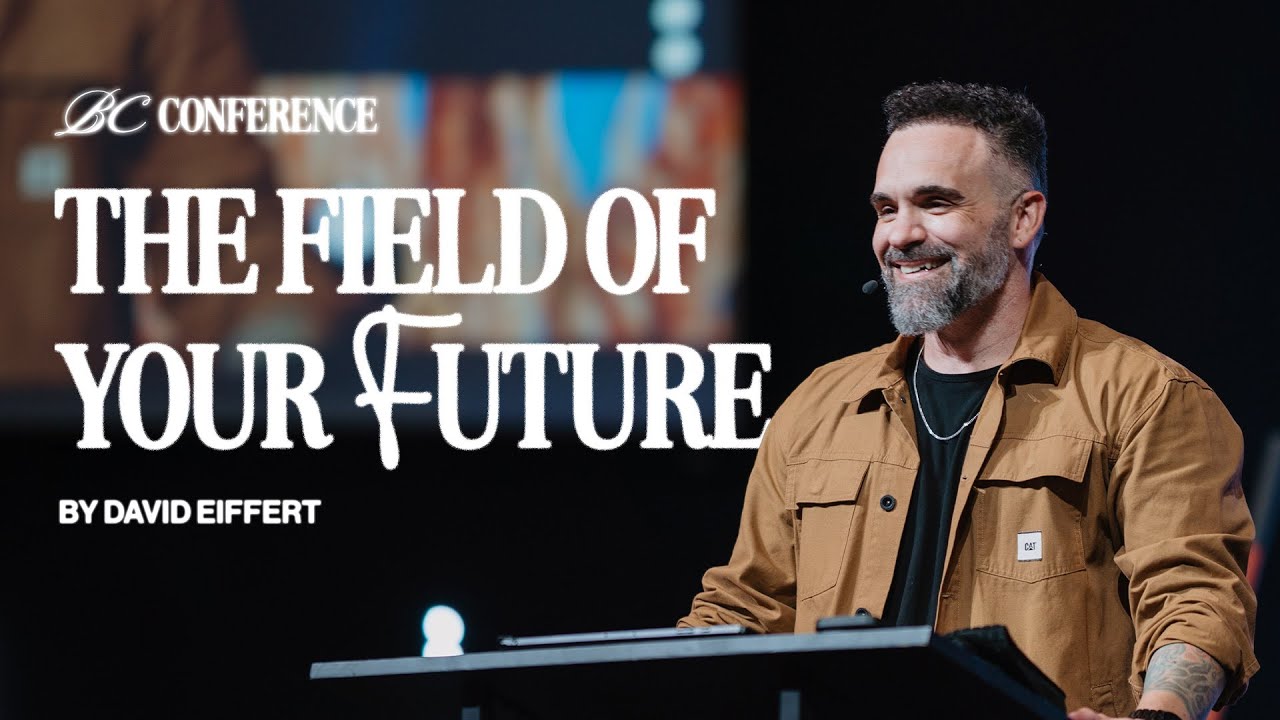
The field of your future
Well, I have a number of pets, my wife and I and my daughter. We’ve got two dogs, we’ve got two guinea pigs and five, and as of this past weekend, five fish. But what I want to show you is one of my dogs. His name is Charlie. Charlie is a beagle. I’ve got a picture of Charlie for you, I think. Nah, you don’t get to see him. Oh boy. Okay, this is Charlie, everybody. He’s a beagle, and he’s a good boy sometimes.
But I’m gonna let you in on a little secret when it comes to beagles. Everyone who’s been a beagle owner in the room knows this secret. Or if you’ve been around a beagle, you probably also know this secret. And it’s this - a beagle will eat anything. And when I say anything, you probably think I’m talking about like anything that’s food. But I don’t mean that. I mean he will eat anything. He will eat anything that looks like food, that smells like food, that once touched food, that used to be food. He will eat anything. I was really driven home when we early on we fed him his dinner in a paper bowl, and he ate his food in half the bowl.
And so, yeah, so Charlie’s a great boy, but last summer something kind of weird happened, and it was this - one day we were just looking at Charlie, and it seemed like there was something wrong with him. If you have a dog, you know what I mean. That there was just something off on this - that he was just kind of roaming around, and when he would stand still, he was kind of like starting to lean over, you know, like something - he wasn’t walking straight anymore. And so we were concerned with Charlie. So what we of course did is we asked Chat GPT, you know, like what’s wrong with our dog, you know what I mean? Like, you know, we’ve got a beagle and he’s acting drunk, and that’s not okay because we’re pastors. Right? So we’re trying to figure out what happened with Charlie.
Well, what happened with Charlie is the day before, my mom, Carol, very sweet lady, she decided she wanted to come over to our house and she wanted to plant some flowers at our house. Just in the backyard, just to kind of spruce things up back there. And so she did that, and what we didn’t realize is that as soon as Charlie saw the flowers, he ate all of them. He ate all the flowers. And apparently there’s some sort of toxic flower that if a dog eats it, it can kind of act like a sedative. And so it wasn’t just that Charlie was just like, we weren’t sure he’s having a seizure. All it was was that he had eaten the flowers, and so he was drunk on my mom’s flowers. Right? He slept a lot.
And so listen to me, you’ve got to be careful what you plant. Because what you planted yesterday becomes your reality today. I’m gonna say that again. What you planted yesterday becomes your reality today.
I want to read verse 4 again, Ecclesiastes chapter 11.
Whoever watches the wind will not plant. Whoever looks at the clouds will not reap.
So Ecclesiastes teaches us to be seed sowers and not wind watchers. In other words, you can spend your entire life waiting for perfect circumstances. But the people that reap today are the people who sowed seed yesterday. That’s right. And the people who reap a harvest tomorrow are the people who sowed seed today.
I want to talk about to the young people just for a quick second if you wouldn’t mind. Don’t you love them? I love them. I just look, I look at them, I look at their energy, I look at their fire. It’s like you got your whole life ahead of you. Some of them they don’t know that. They’re thinking like, oh, I’m 16, I’m so old. It’s like you got your whole life ahead of you. And I was thinking about this, and I was thinking about your future, and I was thinking about where you’ll all end up. And what I’m about to do, I’m about to tell you a few statistics. Okay, but I want to be clear that I’m talking about statistics. I’m not confessing anything over you, right? And I’m not, and I don’t think any of this, any of the bad stuff will be true about you. Are you clear? Are you clear on that? Because if you think I’m confessing this over you, I’m not doing that. I’m just saying statistically.
Okay, so statistically, listen to this, young people. Statistically, 10% of you will become homeless. 10% of you. Listen to this. 20% of you statistically will become drug addicts. 20%. 45% of you will get divorced. 38% of you won’t identify as Christians as adults. 38%. But it’s not all bad. Listen to this. 40% of you will graduate college. 40%. It’s a little lower than I was thinking. 20% of you will be business owners. 15% of you will earn a master’s degree or higher. 0.3% of you will become pro-athletes. That’s Noah. Oh, that’s Gavin. He’s wearing a jersey. Okay. 0.01% of you will become politicians. And we’ll pray for you.
That’s what I was thinking about that. I was thinking about you guys. And I was thinking, like, well, what would you say determines which of those you will become? What determines? And there’s a lot of different ways to answer that. Right? And of course, but the way that I want to answer that tonight is this - is that it depends on the seeds that you sow today. That’s right.
Look, listen to this, Genesis chapter 8, verse 22.
As long as the earth endures, seed time and harvest, cold and heat, summer and winter, day and night will never cease.
See, so no one in the room doubts that in the evening the sun will go down. And no one doubts that in the morning the sun will rise. No one doubts the seasons, right? Fall is coming. Thank you, Jesus. I am done with the heat. I’m ready for hoodies and beanies and jackets and sweatshirts, right? But hot and cold is just a reality. Right? You’re not going to pray it away. Day and night, it’s just a reality. You’re not going to pray it away.
But did you notice that in that list, he includes seed time and harvest. Seed time and harvest is a universal law. Just like hot and cold, just like day and night. It’s a law that’s built into the fabric and function of the earth. Meaning that in the same way you can embrace the reality of hot and cold, summer and winter, day and night. You can be absolutely certain that your life is in a constant state of sowing and reaping. Constantly. Right? And the harvest that you get today comes from the seed that you have sown yesterday. And your harvest tomorrow comes from the seed that you have sown today.
You can write this down if you’re taking notes. There’s a harvest in my future. There’s a harvest in my future. And listen to me, every harvest starts out as a seed. Every heart. And so what? So what am I even talking about? Like, what’s your harvest? Well, it’s your destiny, it’s your peace. It’s your purpose. It’s your provision. It’s like what you’re believing God for.
And listen, too many people want that harvest, but they neglect the seed. Right? And so they’re jealous of people with the harvest. They’re jealous of their position and they’re jealous of their influence. And they’re jealous of their marriage, and they’re jealous of their Instagram, and they’re jealous of the freedom they have, and they’re jealous of the house they live in, like, or whatever. And they’re jealous of the harvest, but they neglect the seed. But God is saying, but that harvest is in that seed. And so people are like, I want that marriage, I want that family life, I want that peace, I want that, I want those finances, I want that job, right? But then, but then they don’t want to sow the seeds now that produce that harvest in their future.
And look, I’m just gonna tell you, I look, I don’t preach anything that I don’t live. Right? Always imperfectly, right? Never per - I but but like I don’t preach anything that I don’t also live. I don’t practice what I preach, I preach what I practice. And there’s a difference. Right? And I and so I just want to tell you when it comes to seed time and harvest, I live this principle. If you want to look at my life, everything that is good that is come into my life, it has come in the form of a seed. And the life that I live now, I live because I’ve learned how to plant and how to nurture seeds. And so if you’re wondering, how is it that you’re up there doing the talk? Look, it’s because I know how to nurture seeds. I know how to start small. Everything I’ve done, everything that matters. And now people can look at me and it’s like, oh man, I can’t believe you have that cool job, and you’ve got a great wife and you got a great family life, and it seems like you’re so happy all the time, and everything just got - you got this great group of friends. All of it starts out as a seed. Everything starts as a seed.
Look at what Jesus says, Mark chapter 4, verse 26.
Jesus also said, the kingdom of God is like a farmer who scatters seed on the ground.
And that right there, that right there, the kingdom of God is like a seed, is why a lot of you don’t recognize the work of God in your life. Why you don’t recognize the purpose of God in your life, the call of God on your life. Because when the kingdom of God shows up, it doesn’t show up like a nuclear bomb. You know what I mean? Where it just like blows your hair back, where it’s like so big and so obvious that like you couldn’t possibly miss it. That’s not how the kingdom of God shows up.
I don’t know if you probably on your phones, I’ve if you live in Albuquerque, I’m sure you probably have started getting the silver alerts. You don’t know those? It’s like bonk, bonk when they’ve lost an old person. Right? So it’s like, and if it’s if it shows up how it shows up, like at 3 a.m., you know what I mean? Scares the heck out of you. You know what I mean? Like we’re jumping out of bed and we’re like reading about Ralph. You know, it’s like, where’s Ralph? Now what they’re hoping we’re gonna do about Ralph, I’m not super sure. At 3 a.m., you know what I mean? Like, we look around our room. It’s not here. Yeah, but please I hope not. He’s somewhere, he’s in someone’s house. But the alert, it’s like it’s like impossible to miss. It’s just so big and it’s so obvious.
That’s not how the kingdom of God shows up. The kingdom of God starts out small. It’s like a little seed. It’s easy to miss. And so when we people, church leaders, when we say kingdom, we’re picturing like a stadium full of people. But when God says kingdom, he’s talking about a little seed. And the work of God always starts out smaller than you think.
Yeah, think about the Israelites in Exodus chapter 16. God goes to his man, Moses, and he says, Moses, tell the people they’re gonna eat bread tomorrow. And all the carb lovers rejoice. Come on, somebody. Rolls, biscuits, bagels, cheetos, cheetos, yeah. And so the Israelites hear this. Tomorrow we’re eating bread. Like, thank you, Jesus. And so they’re excited about it. They wake up, they’re excited for their biscuits and gravy, and they walk out and they look at their delivery. And you know what they say? They say this. They say, It’s manna. They call it manna.
Notice that God doesn’t call it manna. God never said manna is coming. God said bread is coming. But manna is - it’s this Hebrew phrase. It literally means what is it? That’s what it means. It means what is - they walk out ready for a bagel and they look at it and they’re like, what is it? I don’t know if you ever opened a Christmas gift. You know what I mean? Where you’re like, oh. That’s great. What is it? Yeah. Wow. Yeah. So they’re expecting bread. They’re dreaming about bread, and then they go outside and they say, like, what is it? That’s not bread.
The book of Numbers, if you read it, it says that manna is like, it looked like coriander seed. So it’s small little seed. So what he brought them was seed. And so they had to grind the manna into flour. They had to make like cram it into loaves, and they had to bake it. But they look at it and they say, like, what’s that? It’s like a one-star Yelp review. You know what I mean? Ordered bread, got seed, one star. Will not return.
But it’s an interesting thought, isn’t it? Because God’s the one that said they would get bread. And what did he bring them? Seed. Right? So God answered their prayer for bread by giving them seed. God goes, I don’t make bread. I make seed. You make bread.
Bishop T.D. Jakes, he says it like this - God has never once made a table. He makes trees. You make tables. I don’t know if you’ve ever liked a table from IKEA, you know, and it like comes in the mail and you open it up and you’re like, that’s not a table, that’s just a box of wood. It’s like IKEA provides the lumber, but you have to make the table. TD Jakes, he says, God has never once made a table. God makes trees. And TD Jakes goes on to say that many people’s prayer lists are filled with stuff God doesn’t do. Right? And so we’re looking around and we’re seeing all these trees, and we’re praying for a chair. Like, wish I had somewhere to sit. And God’s saying, like, I don’t make chairs. I make trees. You make chairs.
2 Corinthians chapter 9, which you probably know. It says this, that God provides seed to the sower. He provides seed to the sower, but he doesn’t put it in the ground for you. He gives you the seed and he tells you to put it in the ground. And some of you just hold on to your seed and you’re like, where’s my tree? Right? Why ain’t my dream coming to pass? Where’s this marriage I dream? And with seed in your hand. And so it is fine to pray for fruit, but don’t forget to sow the seed.
And the good news is this, thank you, Jesus, you can plant better seeds for a better harvest. You. You can plant better seeds for a better harvest. But like any law, natural law, you don’t benefit from it unless you understand it. And so I’ve got three points for you tonight, because it’s always three things with me, Pastor Shirley. Always.
You have a field
Number one, if you’re taking notes, I’d like you to write this down. You have a field. Why don’t you say that? Because you’re quiet. You - I oh, that’s better. I have a field. That’s very good.
So look over here. So I want you to imagine, if you would, I want you to imagine your future like a field. I realize this is not a field, but you just got to work with me. Okay. This is a planter box. I asked the team, I was like, what does it take to bring a field into the - they said you can’t do it. So we’re working with a planter box. I also appreciate the comedy of I’m wearing a caterpillar shirt. That’s purely coincidental.
But pretend this is a field, okay? So if you look at this, you might think, you might think like that this is dirt, but this is not dirt. This is soil. Right? And this soil is like full of nutrients and it’s full of all kinds of, it’s actually full of life. And it’s just waiting for something to be planted in it. Even if nothing’s planted in it right now.
In fact, I’ve got a little graphic for you that you have a field, and your field, the field of your life. This was a bad idea. You have a field, and it’s divided into like these five, what I’m saying, five categories like this. Your field is divided into these five. First off, is your soul, it’s your mind, your will, your emotions. You’re responsible for it. Number two, your relationships. Number three, your finances. Number four, is your body, and number five is your work. And if you want to live a fruitful life, well, then you’re gonna learn and you’re gonna have to learn how to manage all five of those areas. And you can plant seed into all five of those areas.
By the way, if you come, if you go to another church this coming Sunday, go to that church. But if you come to this church, or maybe you don’t come to church and you’d like to learn more, we’re gonna talk about. I’m gonna talk about Sunday morning. Talk about these five areas and how to sow good seed in all five of those areas.
But there’s a law, if you don’t know, there’s a law when it comes to farming, and it’s this - whether you do something or you do nothing, there is still a harvest in your future. Whether you do something or you do nothing, there is still a harvest in your future. People think, people think if you’re passive, right? That there’s no harvest, but but that’s actually not true. You’ll still get a harvest. Your field, fast forward ten years, your field will still be covered with stuff. What is it? It’s just weeds, right?
And like young people, I know I’m talking to you a lot. I’ll tell you this, this is one of my concerns. I know I say that a lot to you. My concern for you. One of my concerns for you is this - is that fast forward five years from now, that your field is just gonna be full of I don’t care weeds. Right? Video game weeds. Instagram weeds. There’s a harvest in your future. I don’t care who you are, I don’t care your name, I don’t care your background. You have a field, you do. And there is a harvest in your future.
Look at this verse. Proverbs chapter 24, verse 30 says this -
I went past the field of a sluggard, past the vineyard of someone who had no sense. Thorns had come up everywhere, the ground was covered with weeds, and the stone wall was in ruins.
So a lazy person’s field still have a heart - still has a harvest. It’s just not a good harvest. And so the five. Your soul, your relationships, your finances, your body, and your work are all parts of a field that you, sir, you, ma’am, are responsible for.
You choose the seeds
Number one, you have a field. Number two is this, you choose the seeds. It’s mentioned like ten times in the book of Genesis, chapter one, and it’s this - that every seed produces after its own kind. There are different kinds of harvests. There are different kinds of seeds.
So, like if I come over here, for example, and like I see here that I’ve got two packets of seeds. It looks like this one is straw flower, and this one is marigold. Okay, we’ll go with straw flower. Right? So if I tear this open and I come here and I dig a little hole, I’m probably doing this wrong, mom. And I put these seeds in here. Okay. And then I cover it up. Is that bad? Sorry. And then I pray over it. Jesus. No matter how much I pray, this is never gonna produce apples. Never. Right? You plant apple seeds, it’s never gonna produce oranges. Right? Because seeds produce after their own kind.
And I know that that seems so obvious, but you would be amazed at how much counseling I do because of the mess people make of their lives and their relationships because they don’t understand this. Right? So they’re shocked that apples are all over their yard. But they don’t understand that they’ve been planting seeds for that harvest. Right? And so you simply cannot pray away the natural reality that seeds produce after their own kind.
Like if you were to go to a seed store, is that a thing? Okay, if you were to go to a seed store and you say, hello, sir, I’d like to buy some seeds. You know what question they’re gonna ask? What kind? And if you say, Oh, I don’t know, they’re gonna say, Well, what are you trying to grow? Right? Because seeds always produce after their own kind. And whether or not you know it, you are constantly planting seeds in those five areas of your life.
And you might be thinking, okay, I need some practical examples. Okay, fine. I’ve got three seeds that you can sow in any of these areas. This is a sub, these are sub points because it’s conference. So we’ve got extra time. Okay, three seeds that you can sow in any area of your life.
Number one is this - your habits. You can write this down. You’re just one habit away from a better future. You’re just one habit away from a better future. Like even small habits over time have an ability to dramatically change your life. Look at this, Psalm chapter 92, verse 13. For example, it says this.
Planted in the house of the Lord, they will flourish in the courts of our God.
So people who are planted in the house of the Lord, it says, will flourish. Keyword planted. Right? So not coming occasionally. Not CEOs, Christmas and Easter. Not all come if you bring Jabin Chavez. Right? Being planted. Right? It’s talking about the habit. The habit of being a part of the house of the Lord. It says this, the church habit causes you to flourish. I don’t know if you’ve ever thought about it like this. Your habits are seeds. Your habits are seeds.
When I was a teenager, I had a nasty habit. Let me tell you what it was. So when I was a teenager, and my dad could tell you this, I had the habit of every morning, and I would make in our blender a huge strawberry milkshake for breakfast. That’s what I did every morning. And I was like, well, it’s got strawberries in it, it’s got real strawberry, but mostly ice cream. So that was my habit. Now, what do you suppose the harvest was of said habit? A chunky teenager. That’s what you got. Right? Now I have a habit of going to the gym. What do you think the harvest is of that? A slightly less chunky adult. Right? But you can have one milkshake and you don’t go anywhere. You can go to the gym one time and there’s not a harvest. It’s the habit that produces the harvest.
I remember it was probably a month ago, I was at the gym and I was working out. I was doing shoulders that day. And I was doing, I think like lateral raises, if you guys don’t even know anything. So it’s like I’m lifting the weights like this, okay. I was lifting weights and there was this - thank you. I met there was a guy next to me, young kid, right? I probably 20. Apparently I’m at the age where 20-year-olds are kids now. So a kid. But you could tell he was new, he didn’t know what he was doing, no muscle, tiny, you know, bean pole, just a tiny little kid, but he was working out, you know, and he was kind of doing the same exercises that I was doing, and he came over to me and he said, Bro, your shoulders are huge. What’s your secret? And I said, Oh, I said, You want to know? And he said, Yeah. I said, Okay. And so I got up and I go over to where he’s working out, and I said, Okay, give me a set of 10. And so he does it, and I’m correcting his form a little bit, and I’m giving him little pointers, pause at the bottom, blah, blah, blah. And so he finishes his set of 10. He sets down his dumbbells, and I say, Great job. I said, now do that three times a week for 20 years. And he’s like, Oh, you got me, bro. That was good, bro. Oh, you got me, dude. I hear you.
It’s the habit that produces the harvest. It’s the habit that produces the harvest. Pastor Dobb, who’s a phenomenal musician, he has his degree in music, he’s a brilliant musician. He says that anyone can become a great musician 10 minutes a day. He says, You can learn to be a great musician 10 minutes a day. But some people are like, nah, nah, nah. I want to practice for eight hours one weekend and just be good. It’s like you’ll be like four percent better. It doesn’t work. It’s the habit that produces the harvest.
You’ve probably heard it before, but people overestimate what they can do in a day and underestimate what they can do in a year. Right? So, like, can you understand the Bible in a day? Probably not. Right? Can you understand the Bible in a year? You bet. But it’s the habit. Can you get healthy in a day? No. Can you get healthy in a year? You bet. Right? Can you improve your relationships in a day? Maybe a little bit, but can you improve your relationships in a year? You bet. So habits are seeds. You’re just one habit away from a better future. And so here’s a question for you. What’s one habit that you could either start or stop that would produce a better harvest in your life? It’s a good question.
Number one is this, your habits. Number two, these are subpoints because it’s conference. Number two, your attitude. Your attitude. You can write this down. You can’t have a good life with a bad attitude. You can’t have a good life with a bad attitude. Your attitude creates a harvest. Your attitude has a way of showing up on your face and in your body language that sends a message to the world and it becomes what you’re known for. It becomes your reputation. And if your attitude is ugly, your harvest will be ugly. And if your attitude is bad, then your harvest will be bad. If the look on your face ain’t friendly, you’re not going to attract friendly people. But your attitude is a seed that produces something. It goes out before you and produces something in your future.
I recently read that some of the top corporations, they did a survey, some of the top corporations in the world uniformly said that they prefer the right attitude over the right skills. That’s right. The right attitude over the right skills. Because if you’ve got the right attitude, you can learn the skills. But if you’ve got the wrong attitude, it doesn’t matter how skilled you are. No one wants to work with you. And so that’s just one area. That’s just work. That’s just one area of your field. But your attitude affects all five areas. You’ve got five - your soul, your relationships, your finances, your body, and your work, and your attitude affects all of them.
What attitude do you bring to your marriage? Y’all ain’t talking to me. What attitude do you bring to your marriage? What attitude do you bring to your finances? Right? Do you just think poor all the time? Well, I’m never having enough, gotta hold on to what I have. Your attitude produces a harvest.
And we know that this is true in like team sports. So team sports, everybody knows this. That you go into a team sport and the team has a bad attitude, you’re dead. Right? You go in, oh, you know, we’re all sore and it’s not gonna work in this team, they’re gonna kill us. And you’re right, you’re so right. They are gonna kill you. And so that’s why teams they’re always talking about set the tone, set the tone. Noah, this past week talked about set the tone, set the tone. We’re always saying that. Volleyball, we’re saying set the tone, set the tone. Because your attitude produces a harvest.
What’s the tone of your house? Stressed all the time? You know what I mean? You short with each other, arguing all the time. Like your attitude is a seed that produces a harvest in your future.
Ephesians chapter 4, verse 22 says this.
Throw off your old sinful nature and your former way of life, which is corrupted by lust and deception. Instead, let the spirit renew your thoughts and attitudes.
Let the spirit renew your thoughts and attitudes. So part of the work of the Spirit is to help you change your attitude. And the good news is this - you can change your attitude. I tell that to my daughter all the time. Girl, you better change your attitude. And she can. She doesn’t, but she can. You can change your attitude, and when you change your attitude, you change your future.
Your habits are seeds, your attitude is a seed, number three, your words. These are subpoints. Your words. You can write this down if you’re taking notes. Your words can create a harvest, and your words can ruin a harvest. Your words can create a harvest and your words can ruin - our words are more than just sounds you make with your tongue and your lips. Words are more than the way that we communicate. Your words are seeds that go out into your future and create a harvest.
Look at this, Proverbs chapter 18, verse 21.
The tongue has the power of life and death.
Listen to this. And those who love it will eat its fruit. Did you know this? That your tongue produces fruit? Right? Life and death are in the power of the tongue, and those that love it will eat its fruit. Your tongue produces fruit. Your tongue produces a harvest.
And you might be thinking, man, I’m just being honest. I just tell it like it is. Any doofus can tell it like it is. Like, it takes to just look at a problem and state it. Anyone can do that. I’m not saying you don’t ever do it, but anyone can do that. But it takes faith to see like when there’s opportunity. When everyone else is like, oh, it’s just a bad situation. It takes faith to be able to say something positive. And honesty is important, but you can speak faith and still be honest. You can. You can speak faith and still be honest.
Look at this, Joel chapter 3, verse 10.
Let the weak say, I am strong.
Let the weak say. Why does that matter? Why, why, why? Who cares? Who cares what he says? It’s because words are seeds. Right? And so when I speak, I’m sending my words out into the future. You know, talking sickness won’t make you well. Y’all ain’t talking to me. Talking sickness will not make you well. Talking defeat will not bring you victory. Talking poor is not going to help you prosper. Your words matter. Your words go out before you and produce just like little seeds in the field of your future. And they produce things.
That’s why I tell my daughter, I go to my daughter every day, I’ve got an eight-year-old daughter, named Grace. I say, Queen, you are so smart, and you’re wonderful, and we’re so proud of you, and we love you, and you’re doing great. And I tell her, I said, Who are the two most important people to me? I tell her this every day. Who are the most important people to me? And she says, Me and Mom. I’m like, That’s right, baby. That’s right. I love you. So proud of you. And you know, maybe half the time she likes it, and the other half of the time she’s just like, Why do you always say that? Why do you always say but I don’t care? Right? I’m not in it for the reaction in the moment. Right? I’m sowing seeds into her future. I’m sowing seeds into the way that she sees herself. Right? And that’s one of my responsibilities as a parent. It’s one of your responsibilities as a parent.
This ain’t in my notes. But it’s one of your responsibilities as a parent is to sow positive, good, godly seeds into your children. Right? But man, you like - son, you’re nothing. Sometimes I’ll hear parents talk about that in the foyer. They think they’re so cool. Like, son, you’re nothing but trouble. Right? But you’ll never change. Like, why can’t you be more like your brother? And you don’t think that will produce a harvest. You’re crazy. Your words go out. And so you’ve got to be deliberate. Right? You’ve got to choose carefully the seeds that you put in the ground. Your habits, your attitude, and your words all produce a harvest.
Plant anyway
Number one, you have a field. Number two, you choose the seeds. Number three is this - plant anyway. Plant anyway.
Just want to read our main text one more time. Ecclesiastes chapter 4, 11, verse 4, excuse me.
Whoever watches the wind will not plant. Whoever looks at the clouds will not reap.
You could write this down. Your job is not to be a weather watcher, it’s to be a seed sower. Your job is not to be a weather watcher, it’s to be a seed sower. And this is an important point. Because people might hear a sermon like this and think like, okay, Pastor, are you saying that everything bad in my life is because I’ve sown the wrong seed? No. No, I’m not saying that. Just the contrary. You don’t control the weather. Like you don’t, you know what I mean? And some people in the room for sure are living in a bad harvest that was produced by someone else’s bad seed. But what I am saying is this - regardless of the weather, regardless of the situation that you find yourself in, whether or not it’s your fault or someone else’s fault, regardless of the weather, you can sow seeds that create a better harvest. You can. You can do it. Right? You can do it.
We’re not saying everything that happens sometimes, there’s just bad stuff, there’s unfortunate stuff. Unfortunately, God gave everyone a free will, and so you’re 50%, you’re 100% responsible for 50% of the relationship. I tell people that all the time. You’re 100% responsible for 50% of the relationship. So I’m not saying if you have a failing marriage, it’s because you’ve done something wrong. I’m not saying that. But I’m saying that regardless of the situation that you find yourself in, you can plant better seeds to create a better future.
Look at this, verse 6.
Sow your seed in the morning and at evening, let your hands not be idle, for you do not know which will succeed, whether this or that, whether both will do equally well.
So Solomon is saying here is this - is that if you wait for perfect conditions, blue skies. Like if you wait for that, you’re never gonna sow seed. And like I’ve learned this. I don’t know if you have, I’ve learned this. It’s so much easier to be a weatherman than a farmer. It’s easier to be a weather watcher than a seed sower, right? Like, is there anything easier in the world than just turning on the news? Is it easiest thing? Just armchair quarterbacking what everyone else is doing. You know what I mean? Like just being an observer of all the things, you know, everything and everyone, right?
And what do I mean? I mean the weather is just like whatever is going on. Whatever’s going on, maybe it’s going on in your family, right? Maybe it’s going on in your own heart, maybe it’s going on in the city, the nation, the world. You know what I mean? This is the weather. The weather is the stuff that you aren’t responsible for. And just like any farmer can tell you, you’re not in control of the weather. All you’re responsible for is whether or not the seed is in your hand or in the ground. That’s what you’re responsible for.
And the weather, by the way, if you don’t know this, it’s designed to keep you addicted. Right? You can spend your whole day obsessed with tariffs and immigration and ice. You know what I mean? Like what the mayor’s doing, what the governor’s doing, what the president is doing. Did you see Putin? Did you see Zelda? Like, look, I’ve told you this before. Get the info, five minutes and then turn it off. Like, how much bad information can you possibly take? Right? Your job is not to be a weather watcher, it’s to be a seed sower. And the scripture says, whoever watches the wind will not plant. Whoever watches the wind will not.
And you see this in church all the time, right? Oh, y’all launch in small groups. I doubt that’ll work. You know what I mean? Like, we’ve tried that before. Stop sitting around and talking about the weather. You know what I mean? Like why things won’t work, why you’re stuck at your job, why your marriage is bad, why your kids are insane. You know what I mean? Like, stop talking about that all day and start sowing some positive seeds. Don’t watch the weather, sow some seeds. Your main role is not to be a weatherman. Your main role is to be a farmer. You can’t control the weather. But what you can control is whether or not the seed is in your hand, or the seed is in the ground. Not a weather watcher, a seed sower.
One more Bible story I’ve got for you. So in Genesis, because it’s conference, you know? So in Genesis, there’s this man named Isaac. And there’s a famine in the land. If you don’t know what that means, it just means that people are dying because there’s no food. So there’s no food, and so like every tiny morsel of food is super important. And so nothing would grow because there’s a famine. And so, you know, you put the seed in the ground and it would just die, and so people wouldn’t do it. And then Genesis chapter 26, verse 2.
The Lord appeared to Isaac and said, Do not go down to Egypt. Live in the land where I tell you to live.
So the natural thing to do when there was a famine was to get the heck out of there. Right? To go to somewhere that’s not experiencing a famine. But he says, Don’t do that, stay where I told you to stay. And then look at this verse - verse 12.
Isaac planted crops in that land, and the same year reaped a hundredfold because the Lord blessed him.
He planted seed in the famine. While everyone else was saying, like, don’t bother. The seeds just die. That’s all that’s gonna happen. Like, don’t bother. But God says, no, stay there. And because he planted in the famine, God blessed him.
Verse 13 -
The man became rich and his wealth continued to grow until he became very wealthy. He had so many flocks and herds and servants that the Philistines envied him.
So Isaac sowed seed during a famine, and because of that, God blessed him. Everyone else was saying, it’s not the right time. It’s not the right time to sow. But he sowed anyway. He sowed anyway. Not just when the weather looked good, not just when everything was lining up just perfect. He planted anyway.
You know, I think about this church. I think about Marshall and Cindy. I think about a lot of you who’ve been here. You know, I’ve been here for 43 years, but some of you have been here even longer than that. And I think about all the different seasons that you have endured. I mean, and maybe you haven’t been here that long, maybe you’ve only been here a year. It’s fine. But I think about the seasons that you have to endure and the people who built this ministry. They didn’t just build it when it felt good. Was there ever a season where it didn’t feel good? Lots. There’s plenty of times when leading a church doesn’t feel good. But you know what? I plant anyway. I plant it, and you might be thinking, Yeah, I know I should probably start talking to my husband better, but we’re kind of going through a rough patch, so maybe I’ll do - plant anyway. Plant something positive anyway.
You think about like this ministry. I’m just thinking, think about like all the money that has flowed through this ministry over the decades to other nations, to other ministries financing the gospel, caring for the poor, planting churches, right? For almost like 50 years. And what makes that kind of thing possible? Well, you know, sometimes what happens is people will get like a promotion or they’ll get like a bonus or something, or they’ll sell a car, sell a house, and they’ll come bring us like a big check. And that’s great. Don’t stop doing that. I’m not saying don’t do that. That’s beautiful. But the people who have built this ministry are the people who sowed seed week in and week out. They planted anyways. Sometimes it was hard, sometimes there was so much money in the bank account, and they just couldn’t believe it. And they sowed anyways. Sometimes it was a little thin, and they sowed anyways. And now what we’re doing, you know, we’re living here 45 years later, and we’re living in their harvest, not of weather watchers, but of seed sowers. When the weather was good, they sowed seed. When the weather was bad, they sowed seed, they did it anyways.
The field of your future is waiting for what you’ll plant today
One, you have a field, two, you choose the seeds, three, plant anyway. So here’s what I’m wanting to do as we close. I’m wanting if you’d be willing, if you’re comfortable with it, I’d like you to close your eyes just where you’re at, and I want you to use your God-given imagination to picture something with me.
I know there’s like a number of churches represented in the room, and so I’m gonna talk about this church, but if you’re from another church, maybe picture your church. But I want you to imagine a church that doesn’t care about this seed time and harvest stuff at all. Like they don’t even buy it. And so the people of this church, just picture in your mind, people, the people of this church, they just go around, they’re talking negative, they’re complaining, they’re picking things apart. The people of this church, they’re focusing on all the stuff that didn’t go right and focusing on the person that didn’t say hi to them in the hallway. The people of this church, they don’t feel the need to serve. The people of this church, they don’t feel the need to give. I’m thankful - I want to say this. I’m thankful that we do not have a church like that. But I want you to imagine that church. And I want you to fast forward in your mind. If you could fast forward five years, ten years, fifteen years, forty five years. Like, where do you think that church is? Let’s nowhere good. Because God’s work always starts as a seed.
And now keep your eyes closed. I want you to imagine instead a church where people understand how to sow the right seed. And the people of this church, when they give of their time, they know that they’re sowing seeds into the future of that church. And when they give their money, they know that they’re sowing seeds into the future of that church. And when they talk about their church, they know that they’re sowing seeds into the future of that church. And when they do the hard work of getting along, they know that they’re sowing seeds into the future of that church. And now I want you to, same thing. Fast forward in your mind, five, ten, fifteen, forty five years. What does that church look like? Well, that’s a thriving church. That’s a church that’s making an impact. That’s a church that’s changing a city, reaching people for the gospel. That’s a church that’s full of life and joy and passion.
And now look up at me. I think it’s so fun to celebrate. I love it. And I think it’s been and it will continue to be such a blessing to celebrate the last 45 years. And we’ve done that, and we will continue to do that. It’s such a great faith builder, but I also want you to recognize, and I’m talking to my people right now, that it is time for us in this church to sow new seed. It’s time for us, it’s time for this church to get some new seed in the ground because you can’t rely on yesterday’s harvest.
And you know, I told - let me just tell you like over the next year, you know, 2026, like we’re gonna be changing a number of things. We’ve done this transition almost one full year, and we’ve spent this first year transitioning, transitioning the existing church. This is the counsel that we got. They said you need to take some time to transition people into new leadership into a church they still understand, and so we’ve done that, and we believe that we’ve accomplished that. But I just want you to know that this coming year is going to be about new harvest and new fruitfulness.
I told you, I told you of the transition one year ago. I said, for me in this church, there’s one metric, and it’s that fruitfulness. That’s the thing. Is it fruitful? Is this church fruitful? Is that ministry fruitful? Is that effort fruitful? Is that strategy fruitful? Like that is the metric for us going forward. Is it fruitful? Is it producing the kingdom of God in the city? And so I just need to tell you, as one of the pastors of this church is that we’re gonna need a church not of weather watchers, but of seed sowers. You think I’m talking about money? I’m not talking about money, right? It’s so many things where we have the opportunity to put new seed in the ground, right?
And like I’m glad that you come to this church. I am, I’m glad. I’m glad that you love this church. I’m glad that your life’s been changed with the church. I love all of that, but also understand this is that I want this to be a church that your children love too. I want this to be a church for your grandchildren too, you know, and so because of that, I just want you to think about this. I hope you would commit in your heart to be a harvest, not of today, but the harvest of tomorrow. And that only happens by planting seeds today and sacrificing for the next generation.
Look at this, Psalm chapter 126, verse 5.
Those who plant in tears will harvest with shouts of joy.
What does that mean? It means sometimes it’s hard. Sometimes it’s hard to give. Verse 6.
They weep as they go to plant their seed
because they don’t have it anymore, right? It’s painful.
they weep as they go to plant their seed, but they sing as they return with the harvest.
It’s not always easy. Sowing seed tithing is not always easy. Volunteering is not always easy. Volunteering for imperfect people who are like tick you out, it’s not always easy. Right? You think about like this worship team. I’m looking, I see one staff member. Everyone else up there, volunteers. They’re not getting paid to do this. They had multiple practices this past week. Hours and hours of their time, right? It’s not always easy. Right? But what they know they’re doing is they’re sowing into the future of the church. There’s sowing, not just for right now, they’re sowing seeds into the future of who we are to become together.
And when you came in, hopefully, you got a seed packet. And you may have noticed, you may have not noticed also, that you possibly didn’t get the same seed packet that your neighbor got. In fact, there’s like 20 different varieties of that little seed packet. And we did that on purpose because what we wanted to remind you of is this - is that you have something to bring to the church, but you also have something to bring to your family. You also have something to bring to your workplace. You also have something to bring to your city that no one else can bring. And the harvest wouldn’t be the same without you. Right?
We see this in families all the time, right? Where the husband skips out. And God helps the family, but there’s something missing. Because husbands, fathers, you have something unique and powerful to bring to the house. Mothers, you have something to bring. Just like a church. There’s so many different giftings and callings, just like those little seed packets.
And so what I’m hoping you would do with the seed packets, if you would, is I would love for you to take them home and put them somewhere. Maybe you put it on your little nightstand or you know, tuck it into the corner of your mirror or something. But when you would see that seed packet, you would be reminded that this today, this is an opportunity for you to sow seeds into your future. That you have the ability today to do something. Isn’t that amazing? That you can do something to make your marriage better today? Did you know that? You can. No, no, no, no. Yeah, you can, right? We sow anyway. That you have, and in the same way, just like the church, that you have something that you can come and bring to this community to make us better. And our harvest would not be the same without what you bring.
Here’s my closing statement. The field of your future is waiting for what you’ll plant today. One, you have a field. Your soul, relationships, finances, body, and work are all areas that will produce a harvest, whether you tend them or not. Two, you choose the seeds. Your habits, attitude, and words are seeds that produce after their own kind, creating the future you’ll wake up to. Three, plant anyway. While others wait for perfect conditions, those who reap harvests tomorrow are the ones planting seeds today, regardless of the weather. The people who reap tomorrow are the people who sow seed today.