Free Speech
Scripture
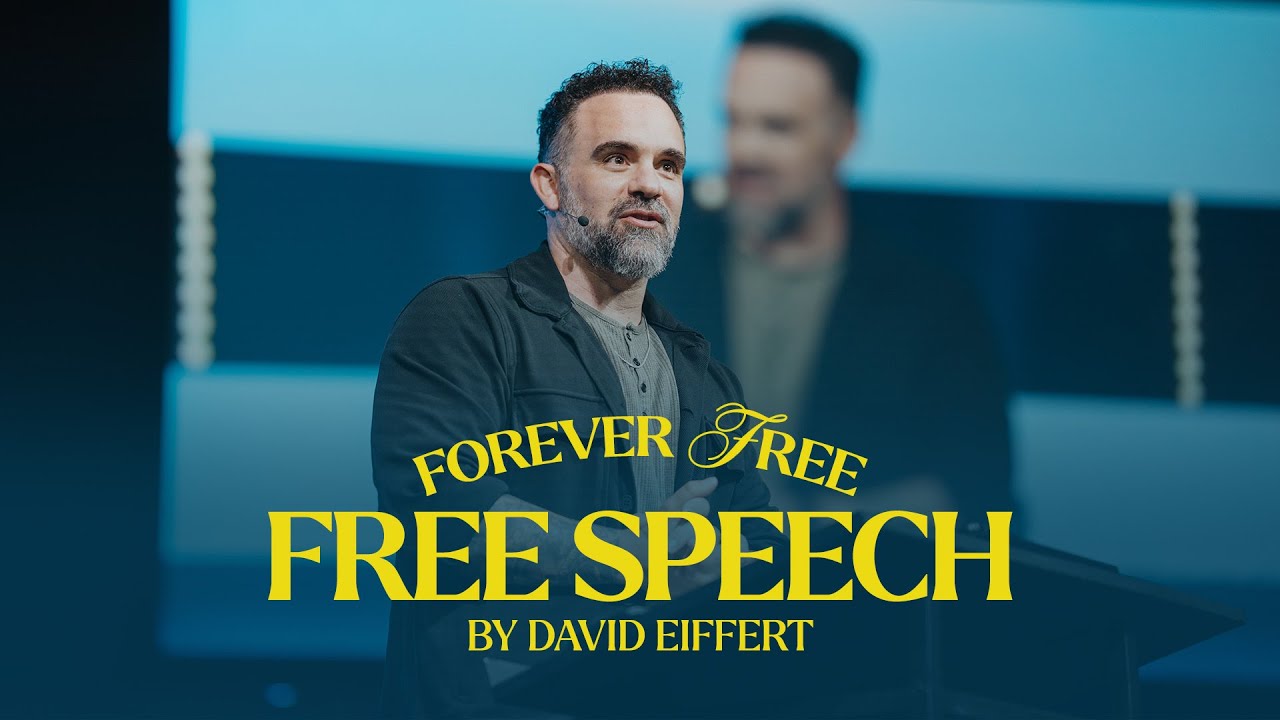
The closing message of the Forever Free series teaches that words are the clearest mark of life in Christ. Free people talk to God in prayer, talk about God by sharing their testimony, and talk like God by speaking life, blessing, and faith into their world.
Transcript
Forever Free
All right. Hey, if you brought your Bibles this morning, invite you to turn with me to Mark chapter 4, Mark 4. And as you’re turning there, you should have received communion elements as you came in. We’re gonna close service this morning with communion. If you did not receive your communion elements, you can raise your hand. Our host team will find their way to you. Looks like they did pretty well getting them to everybody, but there’s a few hands here. So, host team, thanks so much.
We also wanted to take a second and wish Jensen and Pastor Dobb and Kiazi and the rest of the Star Wars nerds happy Star Wars Day. It’s happy may the fourth be with you, as they say. Wow, I hope all of your Star Wars dreams come true today. We’re concluding a four-week series this morning called Forever Free. We began it with Easter and then continued it last week. And if you haven’t been here for the last couple weeks, man, they’ve been incredible. People have been giving their life to Jesus, baptizing people. So God’s moving in the church, and I’m just grateful. I’m grateful. God is good. It’s not about me, it’s not about any of us, it’s about what he’s doing. And us being willing vessels to partner with him to reach this city. I’m so grateful.
Mark chapter 5 and verse 1. A few verses to read to you this morning. It says this: they went across the lake to the region of the Garriscenes, and when Jesus got out of the boat, a man with an impure spirit came from the tombs to meet him. This man lived in the tombs, and no one could bind him anymore, not even with a chain. For he had often been chained hand and foot, but he tore the chains apart and broke the irons on his feet. No one was strong enough to subdue him. Night and day among the tombs and in the hills, he would cry out and cut himself with stones.
So let me tell you what’s going on in this verse. So Jesus, during his three-year ministry, what he would oftentimes do is he would travel to and around Galilee in that region. He would be teaching and he’d be healing. And on this particular day, Jesus and his disciples, they hop on a boat and they head across the Sea of Galilee to the region of the garrisons. This is like a Gentile territory, so there’s no, it’s not, this isn’t like Jewish land, and so it’s unusual for a Jewish rabbi to go to this area. And then when he arrives, Jesus encounters this man who’s demon-possessed.
False Freedom
If you don’t know, demon possession can take lots of different forms. It can manifest itself in different ways, but in this particular case, it gives this man what appears to be supernatural strength. And the people of the town have done everything that they can to try to control him. They’ve bound him with chains, they’ve bound him with shackles multiple times, and he would just snap them like it was paper. And it’s interesting because physically he looked free. Right? No chain could hold him. But if you would look closer at the man, you’d see this tragic reality that this man he wasn’t living at home. He was living, it says, amongst the tombs. So think graveyard. And he wasn’t enjoying relationships, he was isolated from everyone.
False freedom. On the outside, he could break any physical chain, but on the inside, he was still in chains. And his external strength, listen to me, masked his internal bondage. Because it’s possible, did you know it’s possible to look free and not be free? It’s possible to look strong and really be weak. It’s possible to look liberated, but really you’re still in prison. And that’s what we’re talking about in this series, being forever free. And just like Brooks from the Shawshank Redemption last week, who was physically released from jail, he was still carrying prison in his own heart.
Our New Identity in Christ
And week one, we talked about if you were here, we talked about our new identity in Christ. And if you want to live in freedom, well, then you’re gonna need a revelation of who you are in Christ. And here was the three points just to review. Number one, my worst chapter isn’t my last chapter. Two, because he is, so am I. Number three, because he got up, I can get up.
And then in week two, we talked about the soil of our hearts. And if we want to experience the transformation from prisoners to free people, we have to watch our hearts. Paul says this guard your heart above all else, for everything you do comes from it. Everything you do comes from your heart. And the three points from last week was this number one, prepare the soil, guarding your heart by being intentional about what you let in and what you keep out. Two, plant good seeds, consistently depositing God’s word into our heart. And three, pull the weeds, addressing destructive patterns that can choke out God’s word.
Free Speech
So week one was forever free. We didn’t have a subtitle. And week two is free soil. And today, for the dramatic conclusion, if you’re taking notes, the title is this free speech. Let’s go. Free speech. Free speech. You know, my wife and I we love documentaries, and so we were watching a documentary a few days ago. It was like this documentary series, you know, where every episode was something different. And when I say watch, it’s like a little bit generous to say watch, you know, because I’m on my computer, she’s on her iPad. But we’re listening, we’re listening to the case, you know, some unsolved mystery.
And when we were watching this one particular episode, it became like super clear to us that these people were in like Cali. This was cat, these were California people. How could you tell? By how they talked, right? But then that episode ended, and we went to the next episode, and it was just like straight up Brooklyn. And so we were like, oh, oh, this story changed, you know, because you can just tell by the way people talk. You can learn about a lot about a person by how they talk. I can learn a lot about you by how you talk.
Talk to God
You know, I’m a pastor, if you don’t know that. And I’m gonna just tell you real quick what it’s like to be a pastor. So, because I’m a pastor, I talk with lots of people about lots of different things. And as a pastor, you have to be ready, right? In season and out of season to enter into any story. And so, you know, when you wake up, you know, maybe today there’s people that are celebrating, and you have to be ready as a pastor to celebrate. They got the promotion, they got oh, I’m engaged, it’s so credible. And where’s oh, it’s so beautiful, God is so good, we wanted to make.
And then, and then also people might be grieving, and so you as a pastor, in a moment’s notice, you have to be ready to grieve. You have to be ready ready to enter into all kinds of different stories, and you don’t know what your day is gonna look like. Right, right? Like I wake up and I don’t know if this is a day of grief for me, I don’t know if this is a day of celebration for me, but different people, and you just gotta be ready to enter into the story. Some people want a compassionate listener for a pastor, other people like want tough love, and so you never know exactly what your day is gonna look like, and so you have to be ready to enter into these stories at a moment’s notice.
And so part of my job and our job as pastors is to make quick assessments on where a person is at and what we can do to help them, and do you know by how do I assess where someone is spiritually? With their words, right? And so, like the day the type of counseling appointment I’m about to have, I assess within the first 90 seconds based on the way that person the people talk. The way that you tell the difference between someone who has really truly given their life to following Jesus and someone who’s just a recreational church attender is through their words, right?
Just because you’ve been coming to church for 30 years doesn’t mean you take Jesus seriously, right? Like I’m not trying to be mean, but that’s obvious. It’s a privilege for us to pastor all of you, but it doesn’t take long for us to know who the real ones are, and the way that we know is through your words, and in the series, we’re talking about how to live as free people, and I’ll say this: there is no greater indicator and expression of freedom in Christ than your words.
And when we say free speech, I don’t mean that like in some political sense, like, oh, Twitter, oh, free, free speech. I’m talking about this. What do free people sound like? What do they sound like? What does a free person sound like? Because free speech isn’t just about saying whatever you want. Free speech is about using your words in a way that produces freedom and not bondage in your life. Right? And Jesus talks about this all the time. Look, Jesus, Matthew chapter 12, he says this:
But I tell you that everyone will have to give account on the day of judgment for every empty word they have spoken. For by your Jesus, for by your words you will be acquitted, and by your words you will be condemned.
The difference between being found guilty and being found innocent is your words. And so if you want to be a free person and use this incredible power that God has given you with your words, if that’s what you’re interested in, I’ve got three points for you this morning. We’re gonna fly through them. Are you ready? Okay. Number one is this free people talk to God. Talk to God.
Henry Nowen is a great man, went to be with the Lord. I love him very much. He says this a spiritual life without prayer is like the gospel without Christ. What does he mean by that? He means it doesn’t make any sense. It I mean, you know, like the gospel without Christ, it doesn’t make any sense. The spiritual life without prayer doesn’t make any sense. Prayer is the lifeline of the Christian. Not because you always get what you want, but because you always get what you need. Not because you always get what you want, but because you always get what you need.
Philippians chapter 4, verse 6. Paul would say this: do not be anxious about anything. But in every situation, by prayer and petition, with thanksgiving, present your requests to God.
So pay attention to that. Paul is saying that there’s an alternative to worry. And it’s prayer. A lot of people think that those aren’t in the same category. I say they are. He’s saying the antidote, the alternative, instead of being anxious, become a prayer. If you’re anxious about anything, don’t be anxious, but instead pray. And what happens when you pray? Is it does all your problems go away? Is that going to be the next verse? And then all your problems will go away forever. No. Look, verse 7.
And the peace of God, which transcends all understanding, will guard your hearts and your minds in Christ Jesus.
Last week we were talking about guarding our heart. And Paul says that one of the ways that we can guard our heart is with the peace that comes through prayer. Peace always comes with prayer. And so here’s my question for you this morning. Are you ready? Have you prayed about it? Have you prayed about it? Whatever it is that’s bothering you. Have you actually prayed about it? Because I’ve found, like this is just this is just me, but I’ve found that anxiety is like a it’s like an internal reminder that I need to pray. When that when it starts rising, that’s like an alarm that’s going off and saying, You’re carrying something that you’re not supposed to carry. That’s too heavy for you. You need to give that to God. And so peace comes with prayer.
And now is peace the only benefit of prayer. No, not by a million miles, but I’ve lived long enough. And I think you will too to know that things don’t always work out exactly how you thought. Right? And so and so we’re gonna pray. You come up here and we’re gonna pray, and I’m not gonna be able to tell you exactly what’s gonna happen, except I can tell you this. We’re gonna pray and you’re gonna get peace. And so prayer, prayer changes things in the spiritual, prayer changes things in the natural, and prayer always brings peace. Always bringing peace.
And some of you thinking, like, I don’t need peace, I need an answer. To which my response would be, you need an answer, but you also need peace. Peace guards your heart and your mind in Christ Jesus. Peace is your protector. Peace is the strength of God in you when you don’t have any. And like and when you’re in a battle, you need peace. And when the storm is raging, you need peace. When the sun is shining, come on, you need peace. When everything’s going right, you need peace. When everything’s falling apart, you need peace. When when your heart is broken, you need peace. When you’re lying in bed at 3 a.m., you need peace. When the doctor calls with test results, you need peace. Right? When you’re burying someone you love, you need peace. And you receive peace, listen to me, in prayer. You receive peace in prayer.
And you might be thinking, Pastor Day, I don’t know, I don’t know how to pray. I listened to Pastor Cindy, I listened to Pastor Shirley, I listened to Gail. Like, I don’t know how to, I don’t know how to pray. I don’t I don’t know the right words to say. Well, look, it’s not about being polished, but I am trying, I’ll give you two really practical ways to learn and grow in your prayer life. Are you ready? This is as practical as I can be. If if you don’t number one is this if you don’t know what to say, sing. Nobody expect me to say that. If you don’t know what to pray, sing. Did you know that most of worship music is prayer? It’s talking to God. So you turn off Fox News. Right? So you turn off MSNBC and you turn on worship music and you pray. And it’s gonna teach you the words to pray. It’s number one.
Number two, if you don’t know what to say, then read prayers. Like you can you could open the Bible and go to the book of Psalms and read it out loud. Because even when you can’t hear God, you can still read God. That’s right. God, I don’t hear you. Well, do you have one of these at your house? Might I recommend you see? Did you know that the book of Psalms is the Jewish prayer book? That’s what it is. Right? These are prayers. You you go to like Psalm, go to any psalm. These are these are prayers that have been prayed by billions of people across thousands of years. And and if you ever get familiar with the Psalms and you hear someone like Pastor Cindy or Pastor Shirley or Gail pray, you’re gonna say, a little bit of this sounds familiar. You know what I mean? Like, because they’ve developed the language. We could we would say the liturgy. We we they developed the language of prayer through the psalm. Modern worship gets all this beautiful imagery from Psalms. You know, you’re like, man, Joel Houston, like he really gets me. And it’s like, that’s Psalm 19. It’s like you think Joel Houston wrote that?
And so so if you don’t, so if you in both cases, they’re teaching you the language of prayer, and God knows your heart. So if I don’t know what to say, oh man, turn on some worship music, pull out your Bible and start praying things. Let them give you the words because God knows your heart. People in free people who are free in Christ go boldly to the throne of God. They do. And they talk openly to God, they talk honestly to God. Right? People who are free in Christ talk to God, not because they ought to, but because they want to. Not out of religious obligation, but out of relationship. Not because they’re trying to get something, but because they love being with him. Free people. People who are free in Christ, talk to God.
Talk About God
Number one, talk to God. Number two, talk about God. Talk to God, talk about God. People who are free in Christ are free to talk about Christ. And I’m not talking about in church when it’s expected. I’m talking about talking about Christ in everyday life with the people that you live with. Remember years ago, I had a Bible study for young adults called Outlet. It was a whole thing. It was a whole thing. It was a whole thing. But I remember one time I was talking about evangelism. I was talking about like how to share your faith and not be creepy and weird, basically.
And I was talking, and after my message, one girl came up to me, she was a young lady who was a leader in this church. Okay. And she said, Pastor David, she said, people at my work, I don’t think they know I’m a Christian, and I don’t think I want them to know. She said, is that a problem? And I said, Oh, yeah. You knucklehead. I didn’t say knucklehead, but I just said, Oh, yeah. And then I said, Why wouldn’t you want them to know? And she’s like, I don’t know. It just feels embarrassing. And I said, Well, it sounds to me like you’re a slave to other people’s opinions. You mean like that’s like that’s what you’re scared of? You’re scared that like people aren’t gonna true freedom means you’re freed from everything that keeps you in chains. And one of the things that keeps people in chains is the need for approval.
Can I, you know what? Can I talk to the young people for a minute? Okay, okay, be right back. Hey, what’s up? I am so grateful that we have a cool youth group. I am, I actually am. I’m so grateful that there’s people like Noah who’s like all ripped and screaming about Jesus, and like the peer pressure is to love Jesus. That’s amazing. Like, I love that you have Javi, this unbelievable preacher and gifted pastor to lead you in the way of faith. I love all of that. That’s a blessing. And so I’m grateful that you can be cool and serve God. Listen to me. But what I don’t want you to do is ever start thinking I’m cool with worshiping God as long as it’s cool. Right? Because seasons change. Right? Culture changes. And what might make you cool today will make you an outcast five years from now. And so the question is, when are you gonna what are you gonna do then? You know what I mean? I’m so grateful that you can jump up and down with your friends. What about when all your friends move on and they decide Jesus is for dorks? Then what are you gonna do? Right? Because if you’re only willing to follow God when it’s cool, then you’re not a disciple, you’re a pretender. Right? And so you you have to be free from the I’m fine to do this as long as it’s cool. And so we’re so grateful that we have all this stuff and all this stuff is super cool, that’s super cool. But don’t you dare only participate in church when you think it’s cool. Because following Jesus, the invitation that Jesus gives you is this come and die. Right? Pick up your cross and follow him, right? So following Jesus won’t cost you something, it’s gonna cost you everything. Right?
And so to be really free, okay. I’m back. To be really free is to not be ashamed of the gospel. I’m not like look at this, Romans chapter 1, verse 16.
For I am not ashamed of the gospel, because it is the power of God that brings salvation to everyone who believes.
Like, I’m not ashamed of the gospel. I’m not maybe Jesus, like I’m not, I’m not ashamed of it. I just talk about it, it’s just part of my life. You know what I mean? I just bring it up, right? And I’m not talking about being weird, I’m not talking about being a bad employee because you’re trying to convert everyone, right? But like, if God doesn’t come up in conversation ever, then he’s probably not as central as you think. Because free people talk about what they want to talk about. And if you, and if Jesus is really a central part in your life, you bring it up. And you don’t have to be creepy about it.
Look at this. John chapter 4. Jesus has this conversation with this woman. She’s at a well. It’s called the the Jesus have a conversation with the woman at the well. But it’s about a woman at a well. And he has a conversation with her. It’s a scandalous story. For numerous reasons. Number one, the reason it’s scandalous is because the woman was a woman. And it’s just hard to it’s hard to convey just how invisible women were in these ancient cultures. It’s amazing that here in John chapter 4, you see Jesus having the longest recorded conversation with anyone in the entire scripture. Not with other men, not with the disciples, but with this simple lady who’s overlooked by culture. So it’s a scandalous story.
And it wasn’t just that she’s a woman, it was a Samaritan woman. There’s lots of hostility. If you don’t know, Jesus was a Jewish, and there was lots of hostility between the Jews and the Samaritans. They hated each other. Deep hostility. You’d think Israelis and Palestinians. It’s not perfect, but it’s pretty good. Jesus ignores all of that. And he goes and he has this deep heart conversation with this woman. And in doing so, he reveals to her that he’s the Messiah, and her life is completely changed. And then look at what happens. John chapter 4, verse 28.
Then leaving her water jar, she left the water jar, the woman went back to the town and said to the people, Come see a man who told me everything I ever did. Could this be the Messiah?
Right? So that’s all she said. Verse 39. Look what happened.
Many of the Samaritans from that town believed in him because of the woman’s testimony. He told me everything I ever did. So when the Samaritans came to him, they urged him to stay with them, and he, Jesus, stayed for two days. And because of his words, many more became believers. They said to the woman, we no longer believe just because of what you said. Now we have heard for ourselves, and we know that this man really is the savior of the world.
So it’s amazing. So what we have here in John chapter 4 is this whole town comes to Christ because of one woman’s testimony. Now I want you to know this woman did not have a theology degree. She had not been to Bible college. She wasn’t using an evangelism strategy. Like she had just met Jesus like seven minutes ago. Right? All she said was, Come see a man who told me everything I ever did. That’s it. She she just shared her personal experience with Jesus. One simple sentence, and it changed an entire community. Right? And that’s what happens when you’re spiritually free. Is that you just naturally talk about what God has done in your life, right? Not because you’re supposed to, but because you’re excited about it. Because you’re grateful about it. Right?
But what happens for most of us is our fear of other people’s opinions stop us and tell us all the reasons it weren’t. Like, well, what if they ask questions I can’t answer? Alright, well, what if they think I’m weird or judgmental? What if they, what if I mess up and I say the wrong thing? Listen to me, none of that matters. Right? Because you’re not responsible for changing a person’s heart. That’s only the gospel. Only the gospel can change someone’s heart. Like what you’re responsible for is your story. Right? And no one can tell your story but you. And me. If I’m up here and you told me. But even the only reason I know your story is if you tell it. Right? So, like you’re you’re not responsible for changing hearts. You’re responsible for your story.
Look at this, Revelation chapter 12, verse 11.
They talking about the believers. They triumphed over him, talking about the accuser. They triumphed over him by the blood of the Lamb and by the word of their testimony.
So telling their testimony was spiritual warfare. Right? It’s not just like telling a story, it’s fighting the devil. Your testimony has power. Right? You don’t need all the answers, like the Samaritan woman certainly didn’t. Like even when she was talking about Jesus, she said this. I loved it. Could this man be the Messiah? She didn’t even know. Why did she even know 100%? But she just shared her experience. And that’s what you’re supposed to do. Like, I don’t have all the answers, but God saved me from my addiction. I don’t have all the answers, but God saved my marriage. Come on, somebody I don’t have all the answers, but God healed my body. I don’t have all the answers, but God gave me peace when everything was falling apart. I don’t have all the answers, but God showed me my worth when I couldn’t see it. I don’t have all the answers, but God saved me from my shame. God showed me a way when there was like I don’t have all the answers, but God, you know, your your testimony has power.
And you might be thinking, okay, so am I just supposed to like, oh, you start screaming that from my cubicle? You know. Like, what do you what do you even? Okay. So here’s one practical step. I’m trying to be practical. This is the last week of the series. Practical. Here it is. This week, casually incorporate faith into one everyday conversation. Casually incorporate it in, and not in a preachy way, just like a natural way. Someone asks you how your weekend was. You say, I went to church if you did. Someone asks you how you’re handling a tough situation. You mention praying, if you are. And you mention like someone compliments you, you give credit to God if that’s true for you. But you don’t have to have, you don’t have to like quote scripture. You don’t have to give a three-point sermon. Like just be honest. Be honest about God being a part of your life. That’s all the Samaritan woman did. Free people talk how they want to talk. And people who are free in Christ, whose lives have been changed by Christ, talk about Jesus.
Talk Like God
Number one, talk to God. Number two, talk about God. Number three, and I’m done, I can have keys. Number three, talk like God. Talk to God, talk about God, talk like God. So in Genesis chapter one, you know, when I was in children’s church, Pastor Shirley used to incentivize us to learn a scripture. So she’d have like bubblegum, and it’s like, okay, well, you know any scripture. All the kids, you know what they’d hit you with? John 3 16. So predictable. The verse I always used to hit Shirley with was Genesis 1 1. Y’all know that one, right? In the beginning, God created the heavens and the earth. So it so Genesis 1 1 talks, it it shows us that God created the universe. And then in the following chapters, Genesis teaches us how. How. And did you notice it’s interesting that God created the universe not with his hands? He didn’t put his hands on it. Right? He created the universe with his words. It tells us God spoke. Let there be light, and there was light. Let there be fish, and there was fish. Right? But it wasn’t by his hands, he created with his words.
Hebrews chapter 11, verse 3. Listen to this. By faith we understand that the universe was formed at God’s command. So that what is seen was not made out of what was visible.
Did you know this? That everything you see started as something you don’t see. Words. Right? Like you go out there and you look at the Sandia Mountains. Did you know that the Sandia Mountains used to be words? Right? The sandy mountains started with words. Light, the light, this started as words. The ocean started as words. And the same principle is at work right now in your life. Whether or not you realize it, like this is such an advantage. If you can understand this principle, it’s such an advantage over everyone else in the entire world. That you understand the power of this. Most people are just doing whatever comes to natural, and they don’t realize their life’s a total disaster, and they just say, oh, ew. Like they have no idea. But you have an advantage because God has shown us the creative power that exists in our words. Your world, your relationships, your future are all being formed by your words.
And like I see, I see a lot of Christians who should be living free, but instead they’re living in a cage that they created by careless words. Look at this.
Proverbs chapter 18, verse 21. The tongue has the power of life and death, and those who love it will eat its fruit.
Did you know that your words have fruit? Your words have what fruit? What fruit? Your words have fruit? What’s the fruit? Your life. That’s the fruit. Your life, like you are living in the reality that you are creating. Like you have creative power. And it sounds you might be thinking like, David, that sounds a little dramatic. Well, listen, life and death in the power of life and death. And some you might be thinking, like, oh, Pastor David, you always talk about this. Like, I don’t care. Your words still matter. I will keep preaching it until y’all stop talking, start stop start talking better. Not like that. Right? Like what you say about your situation matters. What you say about your family matters. Dad, what you say about your wife matters. I know I’m just talking with my buddies. What you say matters. Women, what you say, what you say with your little friends, like what you say about other people matters. You’re creating life or you’re creating death. Not both. What you say about yourself matters. Like I’m a jokester. Y’all know that. Like I love self-deprecating jokes. So, but but like when we’re serious, I don’t talk bad about myself. I’ll make a little joke up here just for fun. But like, oh, I’m just such a I’m just such a disaster. Like, you ain’t gonna hear that. What you say about yourself matters.
You ready for this? Like what you say about your city matters. Oh, oh, this city’s going to hell in a handbasket. Like, be quiet. People take so much pleasure in like being able to call it like it is. Listen to me. Any imbecile can call it like it is. Right? Like it takes faith to speak life when you see death. That’s what strong people do. That’s what free people do. It takes faith to declare victory in the middle of a battle. Right? It takes faith to bless when everyone else is cursing. It takes faith to speak healing into broken situations. God created the universe by speaking it into existence. And you speak things into existence all day long. Some people think, like, oh, Pastor David, I’m not a prophet. You’re prophesying all day long. You go to lunch after service, you’re prophesying. Right? Your words go out and create things.
So that’s why for me, like I speak blessing over this church. Me. I speak blessing over this city. Like I declare in the name of Jesus that this church will be a lighthouse in this city. And you might be thinking, oh, rah-rah, cool, cool, cool. No, I’m creating. I’m making something by saying that. Like I declare in the name of Jesus that God will set people free through this church. I’m making something right now. I declare in the name of Jesus that the gospel of Jesus Christ will be spread through this church. I’m not trying to pump you up. I’m making something. Chains will be broken through this church. In the name of Jesus. Addictions will be broken through this church. People will be helped in this church. Your words matter. Your words matter. Your words matter. Turn to your neighbor and say, your words matter. Your words matter. Your words matter.
If you want to be free, you’ve got to learn to use this. This is your greatest advantage. I’ll tell you, like, no one you know, no one saw it coming. I say this all the time. No one saw this coming that I’d be the one preaching this sermon right now. No one saw that coming, but I can tell you this that I’m living in the reality, like I’m not a perfect man by a long shot. But I’ve known for 20 years that I create my future with this thing. I’ve known that. If you’re thinking, David, how did you get up there? How is it that you you know your family? How do you got you got this great marriage and you know everything’s good? And look, I have a creative power right here. And free people speak in a way that brings freedom into their lives and their situations.
And the good news is this if your words put you in a cage, you can use your words to break out. You can. Today can be the day this thing turns around. Right? How how by speaking like God, by speaking things into existence, here’s my closing statement. Everything you can see started as something you couldn’t see. Words. Your world, your relationships, and your future are all being formed by words.
So, one, talk to God. People who are free in Christ go boldly to the throne of God, talking openly and honestly, not because they ought to, but because they want to. Two, talk about God. People who are free in Christ naturally share what God has done in their lives. Your testimony has power, even when you don’t have all the answers. Three, talk like God. Your world, your relationships, and your future are all being formed by your words. So speak life, blessing, and faith into existence.
Can you bow your heads? I just need a couple more minutes of your time. Close your eyes. The reason that we do all of this is because we want to be a church, and we want to be pastors that help people become disciples, followers of Jesus Christ. And that’s not a one-time decision, that’s a lifelong process. But you know, the first step, every journey begins with one step, and the first step in following Jesus Christ is saying yes to his invitation. It’s just it’s just receiving the gift. Did you know that there’s this thing in your life, if you don’t know that, called sin? And it’s a problem. It kills 100% of the people. But but God saw us, saw us in our horrible, hopeless state. And he loved us so much that he came down to pay the price that we deserve. And so all you have to do to receive that is just to say yes. It says in Scripture that if you believe in your heart and you confess with your mouth that Jesus is Lord and Christ raised him from the dead, that you’ll be saved.
And so here in just a minute, we’re gonna recite a really simple prayer. It’s for the entire church. The whole church is gonna be praying it. But maybe for you it’s that, or maybe for you, it’s time for you to come back. You know you you know you haven’t been following God the way that you should. Maybe you just got distracted, you know, life’s busy, life’s crazy. But you just know in your heart, one way or another, that you’re not right with God. I want as one of your pastors, I want to tell you this that you don’t have to leave the same way that you came in here. Right? That you can leave confident that no matter what happens in this life, that he’s got you, that you’re in relationship with him.
And so if that’s one, maybe for you it’s a first-time commitment, maybe it’s coming back to God. If that’s you, we’re gonna ask you to do something really brave. We’re not gonna have you come down or anything, but just so that we know who we’re praying with. If that’s you and you’d say, Pastor, include me in that prayer, include me in that prayer to come back to God or to come God for the first time, include me in that. I want you to raise your hand just so that I can see who I’m praying with on the count of three. If that’s you, one, two, three, raise your hand. God bless you guys. God bless you. See you. God bless you. Okay, you can put your hands down.
Okay, so let’s all pray this. As I had to say, the prayer doesn’t save you. Only God can do that. But this prayer is you saying yes to Him. And so, why doesn’t everyone repeat these simple words after me? God in heaven. Thank you for Jesus. I thank you that he came and died. And he rose again from me. I’m sorry that I sinned against you. Come into my life and give me a brand new start. I thank you that you now live in me. And I’ll follow you the rest of my days. In Jesus’ name I pray. Amen. Amen. Hey, can you clap for and encourage those people? Thank you, God.
Okay, so I think I can think of no greater step, first time coming back to God, coming to God for the first time than receiving communion. And that’s how we’re going to close service this morning. If you have your elements, you can go ahead and grab them and get ready. If you’re curious what this weird little device is, it’s a tiny little piece of bread. Let’s call it bread and juice, we’ll call that juice. So it’s just a really simple, and and what this is, is this something that Jesus told us to do.
You know, I think the Christian faith can be really complicated, but if you were to peel away the onion of complexity on the Christian faith to just what’s the core, the core of the Christian faith? What is that? Well, if you peeled away everything, what you would see at the center of the Christian faith is a cross and a table. That’s what you’d see: a cross and a table. And both the cross and the table is an invitation. That’s what they both are. An invitation to come to remember in this moment where you eat the bread and drink from the cup, because Jesus would eat meals with very undeserving people. Most of all his disciples.
And so when we do this, we remember that it’s like the reason that we’re able to do this is not because we earned it, not because we deserve it, not because we’re so good, we’re so holy. Any of that, like this is just a gift. And it’s just saying, God, I don’t know, I don’t understand how you love me. Jesus, I can’t believe you did that for me. But I’m saying yes. I’m saying yes to what you brought from me. And so we’re gonna receive this, we’re just gonna pray, and then you’ll be able to eat the bread and drink from the cup.
But something that I did years ago, an outlet, I’m thinking about bringing it back. It’s a communion invitation. This is an old ancient prayer that’s been in the Christian faith for hundreds of years. It’s just a reminder. I think it orients our heart right to receive this. And one of the lines I just want to tell you, it says that this is the table, not of the church, but of the Lord. And I want to be clear that what we’re we’re not dissing the church. That’s not an insult to the church, but we’re reminding us, we’re reminding ourselves that this isn’t our thing. This is his thing. That just just like the gospel, it’s not ours, we steward it. Right? And so we’re stewards of the gospel and we’re stewards of the table of Jesus.
And so just listen to these words and then I’ll pray for you, and then we’ll receive communion together. Here we go. This is the table, not of the church, but of the Lord. It is made ready for those who love him and for those who want to love him more. So come, you who have much faith and you who have little, you who have been here often and you who have not been here long. You who have tried to follow and you who have failed. Come because it is the Lord who invites you. It is his will that those who want him should meet him here. So come to the table.
Let me pray for you. Heavenly Father, we come as grateful people. Your bride. Spotless because you’ve made us spotless. Not because of what we do. And so when we come to your table as a people, we just orient our heart again to this whole thing is a gift. All of the Christian faith is just grace. Everything, it’s it’s all grace. It’s all grace. Coming to your table is grace. And so we say yes to everything that you have for us, to new life, to new beginnings, to new hope, to new futures. Right? That we we leave the way of the enemy discouragement, would like we leave that and cling to the new life that you’ve provided for us. We say yes.
And to you, my brothers and sisters, this morning, I say this is the body of Christ broken for you. This is the blood of Christ that’s poured out for you. Do this in remembrance of him. And so, Jesus, this morning, we remember your death. We proclaim your resurrection, and we await your return. We remember your death. We proclaim your resurrection and we await your return. Let’s eat from the bread and drink from the cup together.
Thank you, Lord. Right where you’re at in your seats, why don’t we all do this together? Will you all raise your hands? Jesus, we say thank you for the freedom that you’ve provided for us through the cross. And I want to pray a special blessing on my family here. That you would help them live as free people. That we wouldn’t receive your grace and not use it, but that we would receive your grace and we would live in the freedom that you’ve given us. Help us do this. We come against any chain. We come against despair. We come against people who feel hopeless. We come against people who feel unworthy. Like they can’t come to you. We rebuke all of that. And we declare that we are people who live in your freedom. And we say, thank you, Lord. Thank you for what you’ve done. Thank you for what you’re doing. And thank you for what you’re going to do. In and through us. In the name of Jesus. And everybody said.