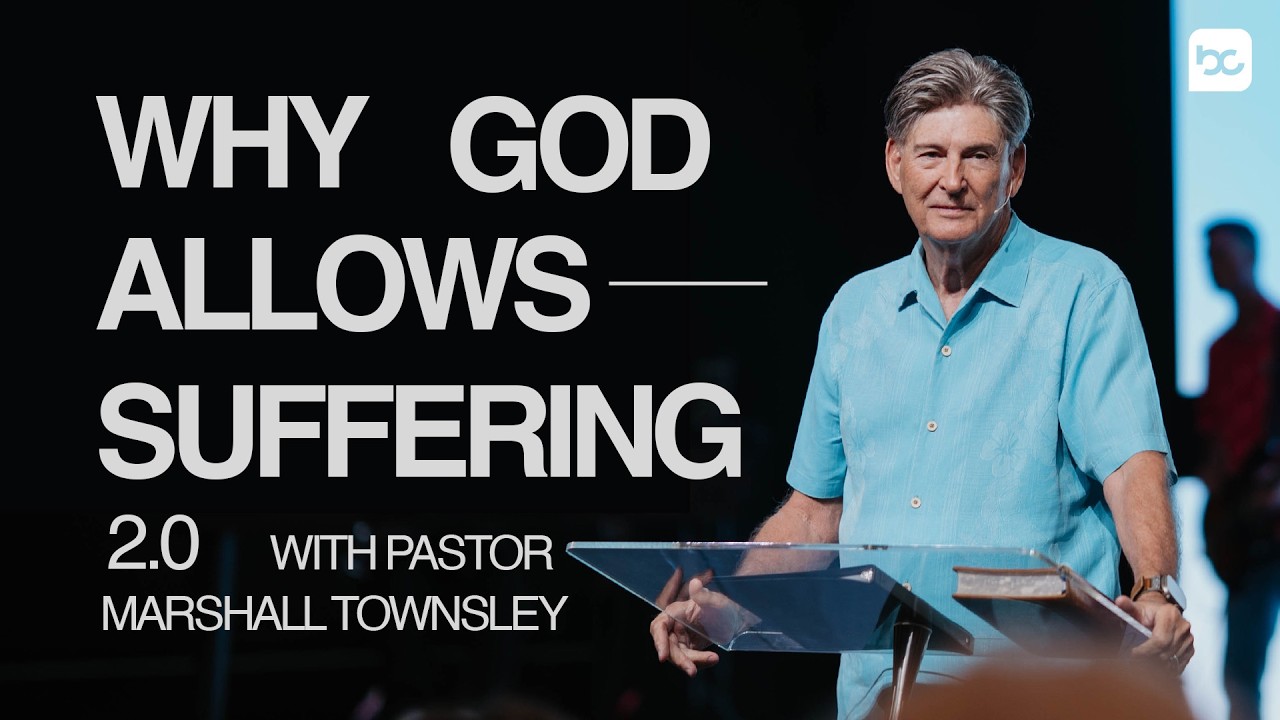
Why God Allows Suffering 2.0
Scripture
Explores why God allows suffering through the lens of relational sovereignty, arguing God rules through relationship and free will rather than control, and teaches believers not to blame God but to turn toward Him, reframe trials, grieve well, and ask for help believing.
Transcript
Introduction: The Hot Potato Series Returns
This is our hot potato series. We did this last summer, and we’re doing it again this summer, dealing with questions that are somewhat difficult to answer. Some of them are controversial in the body of Christ. Others we just need answers to, and they lead sometimes to deep conversations and even heated conversations.
Last year I dealt with why God allows suffering. This summer I’m dealing with why God allows suffering again - this is version 2.0. I know you probably don’t remember a lot of what we talked about last summer, but we’re going to try to layer in some things. My purpose in putting this together is not to repeat everything we talked about last summer, but to try to layer in some things that I hope will lead to a deeper understanding, because I think this is a question that, if it continues to go unsettled and unanswered in the hearts of believers, it’s going to undermine our confidence in our faith in God. It’s going to cause us to waver in our minds. We’re going to end up being double-minded thinkers instead of single-minded thinkers. It really is going to keep us from just believing God and settling our hearts by faith on a number of issues.
If you don’t think God is for you, if you think he’s part of the suffering you’re experiencing in the world, then what are you going to say to him? If you think, as many of us have been taught - I was certainly raised this way - that God controls everything, then what say do I have in it? Why should I pray? If God’s going to do what he wants to do anyway, then what do my decisions matter at all?
So we struggle with this as believers, and some of us have begun to think that God allows hard times, difficult times, even brings suffering, even in some cases initiates suffering, in order to bring us to a higher place spiritually. I’ve heard a lot of these conversations. I’ve battled them in my own Christian life for over 50 years. God reminds me he doesn’t need me to take up for him - he’s okay if I don’t - but I remind him, respectfully, that I’m a defender of his reputation.
A Personal Story
Even humanly, when my father was alive, and he was struggling with alcoholism and other things, struggling with his health, struggling just in life, struggling with depression - sometimes I felt like it was okay for me to criticize him and to judge him, but if anybody else tried it, you better move quick, because I’m coming after you. I’m going to do my best to shut your mouth. I wasn’t a Christian then. I’m a Christian now, but I still might do it if he were still alive. Because he was my father. He was my flesh and blood. He did his part in giving life to me. He was far from perfect, but it just didn’t make sense to me that criticizing him was the right thing for someone else to do.
I remember one night in our kitchen - I was about 17 or 18 years old. Our kitchen was very small; the house we grew up in was very small, space was small. Dad had come back home that night drunk again. He sat down at the kitchen table and began to come out against Mom, saying horrible things about my mother. I said something to Dad that was wrong - it was just emotional. I can’t repeat it in church today. My mom, who had just been listening to her husband berate her and beat her down, came over to me and slapped me in the face. Then she grabbed me by the arm, took me back to another bedroom, had me sit down, and let me know in no uncertain terms that I would never be allowed to address my father like that ever again.
I think about the ways we talk about our Father God - the things we accuse him of, the things we blame him for being a part of. And aren’t Christians doing this? He is our heavenly Father.
Settling Our Hearts About God
I like to talk about this message, and I know I repeat myself quite a bit when I talk about it. Some of it is just an effort to help us get this, because you’re not going to get it if you just hear it one time. You’re going to need to keep hearing it, keep hearing it, keep hearing it. Faith comes by hearing, and hearing by the word of God. This confronts literally hundreds of years of theology to the opposite, and many of us, even without knowing it, have been exposed to it, and it’s become ingrained in our thinking, causing us to doubt and wonder about God’s part in suffering.
I want to do a little more today, to layer something more into your life. I want you to become confident that even on your worst day, God is still on your side. He may not approve of what you did or what you said or what you’re thinking, but he is absolutely committed to you and committed to this relationship being the best that it can possibly be. Hopefully one of these days it’s just going to drop like an anchor into our hearts - we’re going to get rooted and grounded in this - that when something bad happens, you don’t need to turn on God and you don’t need to blame God for what’s happening, because when you hurt, he hurts. When you laugh, he rejoices with you. He teaches us to do that in the body of Christ:
“Weep with those who are weeping… rejoice with those who rejoice.”
He does the same thing. When you hurt, he hurts. When you’re rejoicing, doing the right things, he’s right there with you. Even when you’re off path, he never leaves you, he never forsakes you - he is your dedicated partner in every aspect of life. We should treat him with that kind of respect and never doubt that he is truly on our side and always working on our behalf.
When we get off path, he’s not condemning us and pointing the finger. There’s an accuser called the accuser of the brethren - that’s the one Jesus identified as the thief. He comes to steal, to kill, and to destroy, and he is not a part of God’s team. God doesn’t use him to accomplish his purposes in your life.
Don’t Quote People’s Opinions About God as Truth
I want to teach the word again, because greater trust comes as we hear the truth, not a philosophy about God. When you’re studying your Bibles on this subject, don’t quote people who talk about God and state their opinions about him - even if they come from godly men and women in our Bibles. I’m talking about people like Job, who said:
“The Lord gives and the Lord takes away… blessed be the name of the Lord.”
People have quoted that for years, especially at tax time. The Bible says Job didn’t sin with his lips, but it didn’t say he said what was right - his heart was right. There are people quoted, including men like Joseph, who said, “Those who hurt me intended this for wrong, but God intended it for good.” That was his opinion at the time, and he was a godly man who would go on to represent God greatly in the earth. But just like in our day, men only knew things in part about God, and they would say things - even though it’s recorded in our Bible that they said it, that doesn’t mean it’s necessarily true about God.
Going back to Job - listen to what God said. He comes along and says, in effect, “How dare any of you?” - talking about Job’s wife, what a “blessing” she was, saying “Curse God and die.” His friends were no better. They had all kinds of opinions about God, his actions, what was happening to Job, how it was his fault, etc. There was nothing but a cloud of words with no knowledge of God in the content of what was being said. God said, “Who is this that darkens counsel by words without knowledge? Now stop and listen to me.” And when God spoke, things began to change.
Same thing happens in our lives. We’re listening to people, circumstances, sometimes ourselves, going over and over this stuff, and nothing’s happening - we’re not headed in the right direction. But when God speaks and we listen to him, hear his knowledge and wisdom, breakthrough happens. I know God wants to see greater breakthrough in the lives of his people than what we’re enjoying. But we’re going to have to say a firm no to some things - even the suggestion that God is involved somehow in bringing evil into your life to bring you to a higher spiritual place, or that “God just allowed it.” You’ve got to watch for the subtleties in it, and let the Spirit of God tweak your discernment when these kinds of ideas come at you.
Joseph was a tremendous man. He said a lot of great things about God, did a lot of great things for God. But when he said what he said, he couldn’t really see in the spirit like you and I can, because the Holy Ghost had not yet been given, and men were not yet born again.
Think about the Psalms of David - one day he said, “God bless this king.” The next day, “Break his teeth.” We’re exposed in the Psalms to all of David’s emotional thoughts about God, and then we’re exposed to some that really did come from the Spirit of God. So how can I even believe the Bible? You can believe the Bible - God gives you his discernment, his own ability to see the truth in the Scripture. This is God’s word, and it is inspired by God. But we have to rightly divide the word of truth.
We’re still so moved by people’s personalities - “Oh, wasn’t she great? Wasn’t that an amazing message?” We don’t even remember two hours later what they said. We’re moved emotionally by something. We can be moved by the Spirit of God, which also touches our emotions, but let’s pay attention to what’s being said, what you’re being taught. I thank God we have people from this platform - Pastor David, Pastor Jordan, Cindy, Shirley, Gail, and others - who are absolutely dedicated to the Scripture, not just to what makes people move emotionally. We want God to use us to speak his word through us to you. That’s our calling. You don’t need just another good idea. You need to know the truth, because it’s the truth that sets you free.
How Does God Govern the World We Live In?
The first question is: how does God our Father govern the world we live in? This is a key question. The answer relates directly to gaining a better understanding of a loving Father and his part in suffering in our world. If he really is love, and he really does hate evil, then why doesn’t he just step in and stop it? If he was going to do it, seems like he would have done it in the Garden of Eden - slapped the serpent down before it had a chance to thrust all of humankind into sin against God and bring spiritual death. Why didn’t God stop it then?
Because even then, God had decided how he was going to rule in the world we live in. The short answer is: relational sovereignty.
Relational sovereignty describes the Father God’s decision to rule by relationship rather than by edict or total control. God does control certain things, has from the very beginning - there are spiritual laws in place. The writer of Hebrews says God upholds all things by the word of his power. The earth continues to rotate at a certain rate and speed until God says stop. The sun rises and sets because God is in control of that. Mankind doesn’t need to be in control of it - we’ve already begun fooling with things and messing things up.
But God is not running a cosmic puppet show. He’s not manipulating people. God possesses all power, but instead of using it to exercise a totalitarian form of governing, he chose to grant men free will - and to share in the consequences, both the good and the evil. When you hurt, God hurts. When you succeed and prosper, God shares that blessing with you. It comes with free will.
He chose to govern where love, trust, and willing obedience, along with poor choices, unimaginable suffering at times, and rebellion, are all possible. He chose that. Some people argue he can’t be sovereign if he gives free will, but that’s not true - a sovereign king can choose how he wants to govern his kingdom, and our God has chosen. He could have made us all puppets, but he already has servants and angels who do his bidding at his word. He wanted something different - a relationship with his creation that he doesn’t have with the angels.
The Bible teaches that the angels are curious - they look in on the relationship we have with God and shake their heads at it, because it’s not what they have with God. It’s something higher than what the angelic host has with the Almighty. He wanted to build a family.
A Few Key Points
-
The Father created a world where choices matter. If he controls everything, they don’t. It doesn’t matter how you pray, or if you pray, or what you decide to do, right or wrong - if God controls everything, everything ends up where he wants it anyhow, and it just doesn’t matter. Some theologians, in their extreme belief, teach that some people are born already destined for hell - God’s already chosen their eternal destiny. But if that’s true, why does God say, “If anybody would confess Jesus as Lord, believing in their heart that God raised him from the dead, they would be saved”? I don’t get any answers from people who teach that extreme.
-
Love requires freedom. Think about the alternative to freedom - it’s slavery. God did everything he could, paid the greatest price in Jesus coming and dying on a cross, suffering a horrible death, taking on our sin, to liberate and redeem all of mankind. Love will always bring liberty, not control.
-
Freedom creates the possibility for evil and the suffering it produces. Even when evil and suffering occur, God stands as the protector of free will and the choices it produces. God not only gives free will, he protects it - including men’s choices to do good or to do bad, your choices to sow to the Spirit and reap life in Christ Jesus, or your decisions to sow to the flesh and reap corruption.
I’ve heard people say, “Why did God allow me to commit adultery?” Did that just come out of your mouth? You did that. You decided to do that. Don’t blame God, don’t bring him into it like you’re so surprised. That’s the other point - if God is controlling everything, then he’s also controlling us when we sin. We know that’s not true.
It’s clear from the cross and the Scripture that God is not willing that any should perish, but that all would be saved and come into an eternal relationship with him (2 Peter 3:9). But as much as God hates it when someone rejects the lordship of Jesus Christ, he will exercise relational sovereignty. He is the one who gave freedom of will, and he stands as the protector of that free will - even to protect their right to go to hell. He hates it. He grieves it. He’s done everything he can to stop it, and continues to work to stop it to the last moment, until they perish. He will try to change their mind, but he will allow people to make that choice and accept the consequences - even though his heart is not there.
The existence of evil doesn’t prove God is absent. It proves God creates a world where love and liberty are real.
So don’t misunderstand what I’m saying - God is sovereign. He’s all-knowing, everywhere present, the Almighty, the all-powerful one, and he deserves our worship from a bowed heart and a bowed knee. He could have chosen completely differently, but he didn’t. Instead, he chose love, relationship, freedom of choice, dealing with both the success and the pain of it.
He told Israel, speaking through Moses:
“I call heaven and earth as witnesses today against you, that I have set before you life and death, blessing and cursing; therefore choose life, that both you and your descendants may live; that you may love the Lord your God, that you may obey his voice, and that you may cling to him, for he is your life and the length of your days, and that you may dwell in the land which the Lord swore to your fathers, to Abraham, Isaac, and Jacob, to give them.” (Deuteronomy 30:19-20)
We often stop at verse 19, where God was clear: he gave them a choice. He set before them blessing and, by contrast, cursing. It didn’t say God creates all the cursing or the bad stuff - it said, “Here it is before you: blessing and cursing. If you don’t follow my law…” And then he told them what to choose. It wasn’t multiple choice, but God does the same thing with us. If you want to know what God thinks you should do, he’ll let you know clearly what will lead to life, if you take the time to ask him. If you want to be on your own, you’re on your own - though even then, he’s your ever-present partner in life. Even when you’re choosing the wrong thing, the Spirit of God is grieved, Father God is grieved, Jesus doesn’t want you to do that - and they will give you the right choice to make. But if you don’t, you will suffer the consequence.
It’s not fair when you have to suffer for the choices of other people, but to stop that, God would have to stop freedom to choose - and he’s already made up his mind about that.
How Should We Respond to Suffering?
So what does God do? He gives you and me a way to respond to all of that - a proper way to respond to everything, good and bad.
I’ve watched many people, and God warned about this - David taught about this a week or so ago. When you begin to prosper and things start going good, God says, “Don’t forget me. Don’t forget the grace that was shown to you. Don’t forget the reason for this.” Because that’s what happens - the heart gets lifted up sometimes when we begin to experience the blessing of God. We do the right thing, we sow to the Spirit, and God begins to bless us - the windows of heaven are already open, and blessing begins to pour out on us. Our business gets stronger, we get more clientele, the things we prayed for start coming in. But if we’re not on guard, we’ll begin to forget God.
I’ve seen as a pastor just as many people turn from God in their prosperity as I’ve seen turn from God in their suffering. They stop coming to church when they start getting blessed. They lose sight of the blessing of God, lose sight of who brought it, and forget. They start going off path. And again, when you do that, it’s not that God’s just not going to help you - it’s that you’re bringing him into that with you. He’s there to help you, and he’s there to correct you if you need correcting. It’s different than the condemnation the devil brings. The word condemn means “to declare unfit for use.” God doesn’t declare you unfit for use.
“There is therefore now no condemnation to those who are in Christ Jesus.”
The sin question has already been answered. God has already judged your sin. The wrath of God isn’t coming at you even when you miss it as a believer - that wrath is being stored up for another time. Right now we’re in a time of mercy and grace. It’s going to come, but only after the church leaves. As a Christian, never anticipate that God’s anger is going to come at you or cause suffering for you in your life.
My sins have already been judged in Christ Jesus.
Now, don’t misunderstand - if you’re going to sow to the flesh, as Paul wrote to the Galatian church, God is not mocked; whatsoever a man sows, he’s going to reap. But then again, don’t blame God for what’s happening in your life. “God, why didn’t you stop me?” He’s just there, living with your choice - and loving it, because he wanted relationship with you on the highest and deepest level, and the only way to make that possible was to give people free will. We will live through whatever happens, the good and the bad.
Turn Toward God, Not From Him
Responding well begins with making better choices; better results begin with making better choices.
Number one: turn toward God, not from him. Turn to God - don’t turn on him. He’s facing what you’re facing. He’s a dedicated, committed friend and partner in all that’s happening and that will happen in your life. Settle this issue early if you’re going to turn things around. Whether it’s suffering you caused or suffering from another source, you still have to choose to respond well - be a responsible believer and make the right choice that leads to right results.
Get this out of the way - this whole idea of “why did God allow it?” Don’t turn on him. Don’t let subtle thoughts in - “Why did you let this happen? Did I do something wrong? Are you trying to teach me something?” That kind of thinking talks like God isn’t there with you, like he doesn’t feel the pain you feel, like you’re on your own. That’s a dangerously shaky place, turning on the one who is for you. He is in this with you. He is for you in it. Period. Don’t let that even enter your mind.
“Let no one say when he is tempted, ‘I am tempted by God’; for God cannot be tempted by evil, nor does He Himself tempt anyone.” (James 1:13)
The word “tempted” there is peirazo in the Greek - it means to tempt, test, or try with evil intent; it literally means “to pierce.” Rick Renner, in his own interpretive translation, renders verse 13 this way: “Let no one ever say or even dare to suggest, when he’s going through really difficult times or crushing ordeals, ‘I’m being subjected to these difficult ordeals or hardships by the permissive will of God - working behind the scenes remotely and from a distance, God is permitting all these things to happen to me.’”
Don’t even think it. Don’t say it. It’s a lie - a demonic lie, forged in the furnaces of hell and released into the earth. You are a target to hear it, receive it, and believe it.
James was writing to Christians who had lost their way - persecution was a big part of their life, and they were scattered. From the start of his letter, he’s helping them process how to respond to the tough life that had emerged since their walk with Christ began. They thought, “I’m going to make Jesus Lord of my life - life’s going to be a whole lot better.” Good things did happen, but bad things began to happen too, including persecution. They were thinking, “God, why are you doing this? You forgave our sins, we have new life in Christ, the Holy Spirit lives in us - why are you allowing these horrible things to happen? Why am I sick with cancer? Why did you allow her to die? We prayed and fasted, and she died anyway. God, what’s going on?”
“For I know the thoughts and plans that I have for you,” says the Lord, “thoughts and plans for welfare and peace, and not for evil - to give you hope in the final [outcome].” (Jeremiah 29:11, paraphrased)
God is for you. If he’s for you, he’s not against you, and he is for you every day and in every way.
Flip the Narrative
Number two: we need to flip the narrative. James wrote:
“Count it all joy when you fall into various temptations.”
The only purpose of suffering is to bring you pain. It is to rob you of the goodness God wants to bring into your life. You might say, “I learned a lot in my suffering” - yeah, but you’re a hardhead if you had to go through suffering to learn it. God will teach you whatever your circumstances are when you just stop and draw near to him and listen. It’s not what you’re going through that’s the teacher. Suffering may be the classroom you choose, but you can go to another classroom - to be healed, set free, lifted up, encouraged.
We’re not talking about doing something silly or foolish when suffering happens, like laughing at people who are suffering - that’s not what James means at all. He’s teaching a spiritual principle many people miss. Here’s my own interpretive understanding, after hours and hours of study on the book of James, chapter 1: when you find yourself completely surrounded by darkness - the word “surrounded” in the Greek paints a picture of this: regardless of whether you look north, south, east, or west, up or down, all you see is darkness - he says, stand up and rejoice, knowing that when your faith is tried, when you become a doer of the word, putting it to the test, acting on the truth of God’s word, living it by faith, it will build patience to receive the promise.
Don’t forget - God does test you, but not with evil. He tests you like any good teacher would. He educates you, grows things on the inside of you in your time with him, and then gives you an assignment - to take what you’ve learned and act on it. When something happens against you, contrary to it, he reminds you in that moment: he didn’t bring that into your life. There’s a lot of it going on in our hurting, broken world, but he reminds you to act on what he taught you. Instead of wondering “Why is God doing this?” the Spirit of God rises up inside us and reminds us this is a perfect opportunity to act on what we’ve been taught.
Satan tries you too, wanting to pierce you, to bring pain and suffering. But you can also try yourself - some translations, like the Amplified, render it: “Don’t just be a hearer of the word, but be a doer of it - try your faith, put the word to the test.” Even God said this to Israel concerning the tithe: “Try me - test me by acting on what I’ve told you to do about tithing, and see if I won’t open up the windows of heaven and pour you out a blessing that you don’t have room to receive.”
As you let the power of patience work, the fruit of patience is born in your life, and you will get your breakthrough - you will be whole, entire, wanting nothing (James 1:4). If you don’t know what to ask, if you don’t know the next step of faith, ask God for his wisdom. He won’t scold you or make you feel stupid. Trust God, ask him in faith - there’s no reason to doubt him. You have his support. Settle it in your mind, and you’ll receive what you need next.
Grieve Fully, Heal Fully
People need to grieve. I talked to a dear brother of ours, a former pastor here at Believer’s Center, who had a great tragedy happen in his life - he lost someone very dear to him. I texted him because I knew he’d be processing so much, and said, “Give me a call when things settle down and you’re able to talk.” I didn’t hear from him for several days, so I called. When we first started talking, he could barely put a few words together. By the end of our conversation, he was beginning to perk up a little, because I had the opportunity to remind him of things he already knew to be true, that he’d already lived through in other situations - he’d also lost his wife tragically a few years ago. He knew what to do, but he needed to be encouraged to do it again.
The Bible says God is the glory and the lifter of our head. I told him, “You don’t need to rush grieving. There’s a right way to grieve and a wrong way to grieve - choose the right way. But don’t leave God out of your grieving.” You do it as long as you need to, and everybody is different. If you’re ministering to somebody, remember those things - they’re key points of wisdom to help them.
You’re allowed to miss what you lost or what you once held closely. But don’t allow it to define you, or rob you of the future God still has for you. You need to grieve fully, but you also need to heal fully. Don’t allow grief to become your new normal. Let God complete that process of healing on the inside of you. There comes a place where, even in the face of great loss and suffering, you begin - as a spiritual act, not just a shift in emotion - to rejoice in view of what God has said in his word about you and your future. He’s your partner in going through this process of grief.
Ask the Father to Help You Believe
Number three, and we’re done: ask the Father God to help you receive your breakthrough.
I’ve learned a valuable lesson about how to confront suffering that I’d like to share before we leave today. I said this to the Lord recently - it wasn’t for me, it was for somebody else I knew we were praying for, but I said it: “Why do you make it so hard to receive help? I know you’re not my problem. I know you didn’t do this.” That’s a subtle way of turning on God, and I recognized it, but I said it.
Maybe some of you are thinking it too. You’re hurting, you’re struggling. You feel like God’s forgotten you. You want to believe, but you just can’t get there. There’s still no peace, no answer, no change, no manifestation of the promise of God. And you’re asking, “God, what more can I do?” - your mind slipping over into good works, thinking you can get God to do more. That’s a lie too. We never deserve what we ask God for - thank God Jesus provided it for us.
Almost immediately, I heard God say, “I’ve made all things possible. All I ask of you is to trust me, and I’ll help you do that.” I was saying, “Why do you make it so hard?” and he said, “I’ve made all things possible, and all I ask of you is to trust me, and I’ll even help you do that. I gave my Son to bring blessing, help, and relief. Ask me to help your unbelief, instead of doubting my care or willingness to help you, regardless of what you need. I didn’t say only miracles happen to those who believe. I said all things - and that includes what you need right now.”
This comes from the story of the father whose son was possessed by a demon. He traveled to get Jesus’ help, but when he arrived, Jesus wasn’t there - that must have broken his heart. He asked the religious elite for help; they didn’t know what to do. He turned to the disciples, but they couldn’t cast out the demon, and the father suffered another disappointment. Then Jesus came down from the Mount of Transfiguration and asked what was going on. The father said, “My boy - he’s suffering, Jesus. If you can do anything, help my son. Please help him.”
Jesus didn’t get in his face and say it wasn’t about what he could do - but he did make it clear the question wasn’t about his ability. I think sometimes we’d receive more help if we learned to ask a better question. Jesus said all things - not just the miracle needed, but all things - are possible to him who believes. And then Jesus performed a miracle that father would always remember, along with the encouragement Jesus gave him.
I’ve begun to do that when I find things harder than they seem they should be - when I’m pushed back on things, and I know I’ve prayed according to the will of God, prayed in faith, but it’s not happening. Instead of turning on God, blaming him, I ask a better question and make a better request: “God, just help me believe. Help me to believe.” Because believing is still my responsibility - Jesus isn’t going to believe for you, but he’s right there to help you believe. My first responsibility is to respond to his ability. So I humble myself, I quiet myself, I don’t argue my point or my worthiness to receive - I just fall into his arms and say, “Help me. Help me to believe.” I try to do what that father did.
“But please, if You’re able to do something, anything, have compassion on us and help us.” Jesus said to him, “What do you mean, ‘If You’re able’? To believe, all things are possible to the believer.” … When he heard this, the boy’s father cried out with tears saying, “I do believe, Lord, help my little faith.” (Mark 9:22-24, The Passion Translation)
I find greater peace and greater grace in moments like that than in moments where I’m just pressing and struggling, letting my mind fill with worry. I get quiet, and greater peace, greater grace, and faith rise in me. That’s Jesus at work.
“Come to me, all you who labor and are heavy laden, and I will give you rest… my yoke is easy to carry.”
That speaks of relationship - the sovereign God in relationship with you. He chose free will for all of us; he’s in it with us, yoked to us, we’re yoked to him. As believers, if we do the same thing, we’re going to experience more of the impossible in our lives - a greater sense of God’s presence, his partnership, his friendship, clarity on what to ask for and how, and greater faith, if we’ll keep ourselves in a humble place.
Closing Word
“Set your gaze on the path before you with fixed purpose, looking straight ahead. Ignore life’s distractions. Watch where you’re going. Stick to the path of truth, and the road will be safe… Don’t allow yourself to be sidetracked for even a moment, or take the detour that leads to darkness.” (Proverbs 4:25-27, paraphrased)
Suffering threatens us, but the word says if we keep our eyes forward on Jesus, walking with him, the end result will be a road with safety, smooth before us.