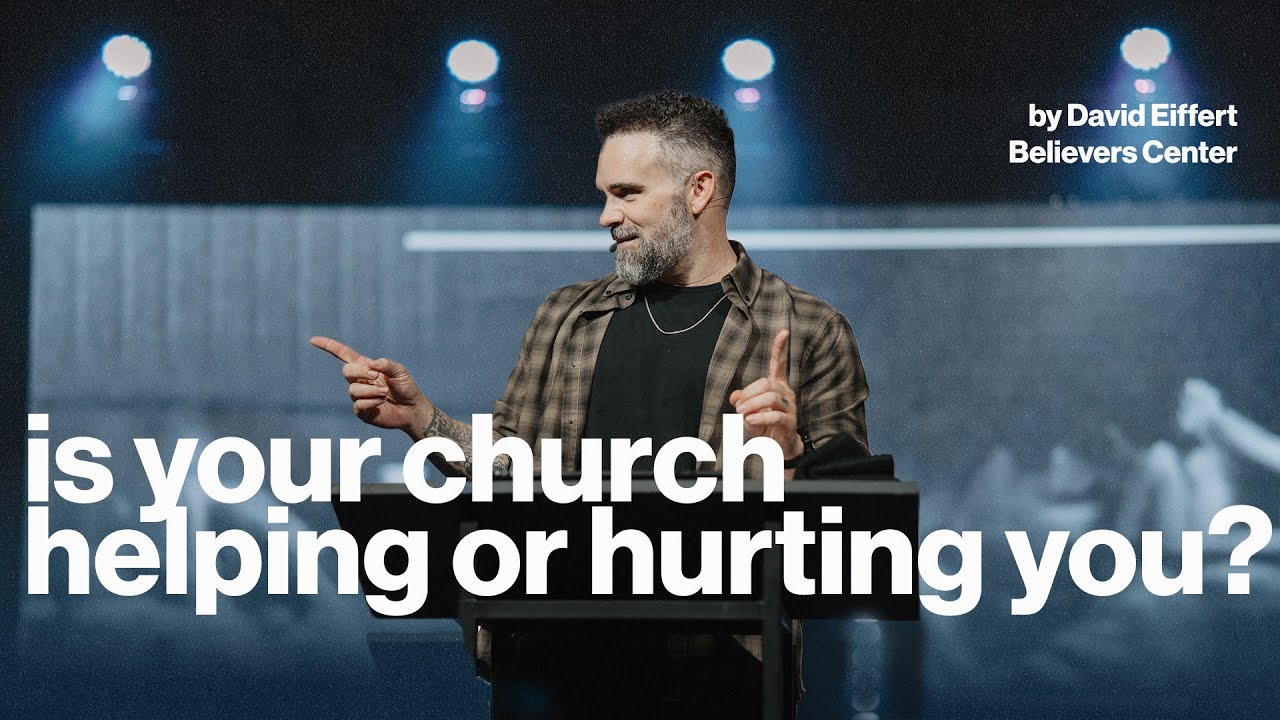
Is Your Church Helping or Hurting You?
Scripture
Five criteria for discerning a healthy church versus an unhealthy one: whether it empowers you to hear from God directly or creates dependency on leaders, builds bridges or barriers between people, fosters guilt or self-worth, makes life heavier or lighter, and motivates through love rather than fear.
Transcript
Deep and Wide
Let me tell you something that I love about this church. So, usually, you know, churches, a lot of people will make this division. You may not even know this, but people will make the division that some churches are deep and some churches are wide. So, what that means is this is that some churches are like deep, studying, theological like churches. And then other churches, they try, instead of that depth, they try to cast a real wide net that appeals to lots of different kinds of people. And I want to say that I think this church is both. Right? We’re not allowed to, or we’re not afraid to, we are allowed to, we’re not afraid to deal with really tough issues.
And so there’s gonna be times here at the church where we’re just like celebrating and we’re proclaiming the gospel and we’re encouraging you and loving you and filling you with faith. And then there’s other times in the course of a year that we’re gonna be talking about real, meaningful and deep conversations. And so I wanted to say thank you for being a church that can thrive in both of those contexts. You guys are great.
Is Your Church Helping or Hurting You?
And so this week’s hot potato, if you’re taking notes, here’s the question that I would like you to write down if you’re ready is this: Is your church helping or hurting you? Is your church helping or hurting you? I have told you many times, but I come from a generation that by and large, not completely, there’s exceptions, I’m an exception, but my generation, a lot of them have collectively decided that the church was not helping them, that the church was instead hurting them.
And while that breaks my heart, I would say it would be dishonest to pretend that there aren’t churches in the world that aren’t helpful and are actually hurtful to people. And if you’re thinking, like, no, sir, that’s not possible. Well, let me remind you that the church of scientology is in fact a church. Right? And like, and like, look, this church, I’m not saying we’re perfect here, but at least we don’t charge you $300,000, you know, to find out you’re related to aliens.
But the Church of Scientology is a church. It’s not a Christ-centered church, but the church of scientist, it is a church, and it’s a church, listen to me, that hurts people. And to you, that’s probably pretty obvious. But to the people going into that church, it’s not obvious. And this is actually not a new phenomenon at all. This is actually a phenomenon that Jesus dealt with. There was this group of people called the Pharisees. And the Pharisees, what’s interesting about them is that they had the right doctrine. They knew how they knew scripture backwards and forwards, but they produced unhealthy people.
Look at what Jesus says. Matthew chapter 23, beginning in verse 2. He says this. So you must be careful to do everything they tell you. But do not do what they do, for they do not practice what they preach. They tie up heavy, listen to this, heavy, cumbersome loads and put them on other people’s shoulders, but they themselves are not willing to lift a finger to move them.
So Jesus is saying here, he’s saying what they’re teaching is right, but the effect that they have on people is wrong. What they teach is right, but the effect that they have on people is wrong. And so church hurt, church hurt is real. Like I know it’s it’s trendy right now, and everyone’s, you know, got some story about church hurt, but that does not remove our responsibility, our responsibility to everything in our power to make sure that this church is as healthy as possible.
Criteria for a Healthy Church
And for me, just to let you know this that I love the church. For me, the church has been one of the best things that’s ever happened in my life. I grew up in the church, I met my wife in this church, I’ve been loved in this church, I’ve been encouraged in this church, I’ve been corrected in this church. And so, though I’ve never been part personally of an unhealthy church, it’s clear that unhealthy churches and communities exist.
And the irony, though, of course, is this is that the antidote to an unhealthy relationship is not no relationship. The antidote to an unhealthy relationship is a healing relationship. And so we want to say to all of you in the room, thank you for taking the risk of being a part of this community. And the good news is this this morning that scripture gives us lots of tools on how to discern a healthy versus unhealthy church or spiritual community. And so that’s what we’re gonna dive into this morning. Are you okay with that?
Does it Empower or Create Dependency?
Okay, I’ve got five things. This is criteria for a healthy church. Five criteria for a healthy church. Number one, if you’re taking notes, I’d like you to write this down. Does it empower or create dependency? Does it empower or create dependency? Can I speak frankly for just a minute? I am so blessed and so grateful to be one of your pastors. But I need you to know this is that your relationship with God is not dependent on me. Right? Your relationship with God does not depend on Pastor Marshall. It’s not dependent on Pastor Cindy, Pastor George, any other pastor.
And to whatever extent we become the source of your experience with God, like we’ve created a dependency between you and me that’s really gonna hurt you later. You know, some people call their pastor for everything. You know what I mean? Like, Pastor, should I take this job, Pastor? What should I eat for lunch? Pastor Shirley, what far you know, and she’s like, bro, I don’t know even know what I’m eating for lunch.
Look at what the writer of Hebrews says, he says this, or they say this. Let us then approach God’s throne of grace with confidence, so that we may receive mercy and find grace to help us in our time of need.
Hear that? So you can approach God’s throne with confidence. You can, right? Not just pastors, not just seminary people, you can.
And look at what Paul says, 1 Timothy chapter 2. He says this, for there is one God and one mediator between God and mankind, the man Jesus.
And so there’s one mediator, and you might think be thinking, that’s Pastor Marshall, right? Right? No, that’s Jesus. There’s one person between you and the Father, and that’s Jesus. And a healthy church equips you to hear from God directly. Right? And we’ll walk alongside you, we’ll give you tools, we’ll give you wise counsel. But what we’re trying to do is we’re trying to help you recognize the voice of God and the leading of God yourself.
And like when you don’t have a clear word from God, what do you do? You use wisdom. When you don’t have a direct word, you use wisdom. But the goal is to get you to a place where you can hear from God, you can receive from God directly. I’m so grateful for godly counsel. I get so much great counsel, and it benefits me so much. But if counsel is truly godly, it’s going to be pointing you to Jesus. And it’s going to be teaching you how to receive God from God yourself.
You know, I love the Catholic Church, right? Like, I’m grateful for the contributions of the Catholic Church. Absolutely. One of my principal problems, I guess you could say, with the church, is that I don’t need a Pope telling me what I think about everything. Right? Like, like nothing, no disrespect to the Pope. Nice guy. Great hat collection. You know, it’s like sure he’s cool. Right, but like, I don’t need him telling me what to think about everything. I have a wife for that. See, all the men in here are like smart. Sky smart.
But seriously, listen, listen, God is my father. And he’s a king and he’s a judge and he’s almighty and he’s holy, but he’s also my father. And I go directly to him. I don’t know if you know this, but healthy leaders won’t make decisions for you. Right? Like, like we’ll walk alongside you, we’ll give you good counsel, but we’re gonna help you learn from learn and hear from God yourself.
You know, Paul talks about, he talks about the milk and the meat of the word, and how he wishes people would be able to eat the meat, the meat of the word, but since they’re babies, all they can eat is milk, all they can drink is milk. And so I don’t know if you think about like the difference between milk and meat. There’s a lot of differences. But one difference that I think of is this is that milk is processed through another person. The mother. Right? And so the mother eats grass. If we’re we’re doing cows, let’s do cows. Or food if we’re talking about humans. Right? So the cow eats grass, processes it, and then puts out milk. And so milk is processed through someone else.
And so I don’t know if you think about it like this, but a sermon is milk. Right? Because what you’re hearing right now, when you turn on something on you, like what you’re hearing, you’re hearing my studying, my process, and I give it to you. And that’s like great, and that’s necessary. But when you become spiritually mature, it’s not enough for you to just drink milk. You also have to be able to receive, you need to be able to like go to the word of God yourself. Get wisdom from the word of God yourself.
And look, I love Joyce Meyer’s sermons, and I love Steve Stephen Furtick’s sermons. Like I’m thankful for all that. But when crisis hits, the question is not what does Stephen Furtick say? The question is what does God say? And we just want you to know you can hear from God yourself.
Young People, You Can Hear from God Yourself
Young people, can I talk to the young people for a second? I love you. You guys are awesome. You know I love you. Um so grateful. I think your generation is absolutely incredible. If you would allow me to say one concern I have that’s not your fault, it’s just the world that you live in, is this is you have so much access to incredible milk all the time. Right? YouTube, um, Spotify, podcasts, Instagram, it’s like there is so much fantastic teaching, these speakers that are absolutely unbelievable. But what would be a mistake is for you to become so dependent on other people’s study that you never learn how to read from scripture yourself, right?
You can become so because the milk is so good, you never learn to eat meat. And when crisis hits, I’m telling y’all, it’s not just like, where was that sermon? The Joyce My No, you need to be able to like go to Scripture yourself. You young people, you can hear from God yourself. But that requires personal devotion.
Robert Ferguson, he’s the Hillsong teaching pastor, he says this, talking about your generation. He says, I see a generation that’s in the midst of revival, that has the potential to change the world, that excels at public passion. Is that true of these people? They excel at public passion, but potentially doesn’t have the private devotion required to change the world. So if all you ever do is consume spiritual content from other people, even if it’s great content, then you never develop the private devotion required to hear from God yourself. And in the long run, it’s gonna hurt you.
Okay, I’m done. Back. Hi. Welcome. What’s amazing about healthy churches, though, is that healthy churches don’t just make disciples, they make disciples that make disciples. And so, and so you don’t just learn to follow Jesus, you learn to help other people follow Jesus as well. So, criteria for a healthy church. Number one, does it empower or create dependency?
Does it Build Bridges or Barriers Between People?
Number two is this does it build bridges or barriers between people? Let me tell you something. It’s fine to have differences in beliefs. Did you know that? It’s normal. In this room, we have differences in beliefs. From this church to citizen church to sagebrush church to legacy church to Calvary. Like we have differences in our beliefs. And that’s normal and that’s healthy. But what’s not okay is for a community to communicate that unless you believe exactly like we believe, that somehow you’re the enemy. That’s not healthy.
Look at what Paul says, Ephesians chapter 4, verse 3. He says this. Make every effort to keep the unity of the Spirit through the bond of peace.
Make every effort, it means it takes work. Unity doesn’t just happen. Right?
And then he says this to the church in Rome, Romans chapter 15, verse 7. Accept one another. Then just as Christ accepted you in order to bring praise to God.
So how has God accepted you? We’re supposed to accept people how God accepted us. How does God accept us? Imperfections and all, right? Not because you have everything perfect, right? And so an unhealthy church is gonna put in you like an us versus them mentality. Right? And it teaches it teaches you to look at people with suspicion, like different denomination, probably wrong. Right? Different political views, views, like probably deceived, different worship style, like probably not really spiritual. A healthy church is going to help you love people better. Even people that are different than you. It doesn’t make you more judgmental, it makes you more loving.
Tim Keller is a pastor that went to be with the Lord years ago, New York City, one of my heroes in pastoring, he’s absolutely amazing, but he says, he says this. Tolerance isn’t about not having beliefs, it’s about how your beliefs lead you to treat people who disagree with you. Right? Tolerance isn’t about you not having any beliefs, but tolerance is about how your beliefs cause you to treat other people.
I think this is a fascinating question. You can write down. I put it on the screens for you. Does your faith make you more loving towards people who disagree with you or less loving? Does your faith make you more loving towards people who disagree with you or less loving? See, following Jesus, if you don’t know this, should change your opinion on lots of stuff. If you’re like, no, no, no, no, no, no. Keep keep just wait. Following Jesus is going to change your opinion about lots of stuff, but it’s also going to make you become more loving, especially with people who disagree with you.
And so the test, of course, I think it’s a very healthy test, and you can even ask this of this church. Does this church make you more loving or less loving? You know, a decade ago, we went to El Paso, I think it’s I don’t know, 14 years ago, something like that. We went for Charles Neiman’s 60th birthday. Y’all remember that? Charles Neiman is our pastor’s pastor, and it was his 60th birthday. So it was like this big celebration. It was this huge service, and it was this big party. And they did, I wonder if y’all remember this, they did like a QA with Pastor Charles just to ask him about ministry, ask him about his experiences in ministry.
And the interviewer, the interviewer asked this question of Charles Neiman, and I never forgot it. He says this what’s something you wished you had done differently? It’s an amazing ministry, and he asked the question, what’s something you wish you had done differently? And I wrote this down, I never forgot it. He says, Charles Neiman says this. I wish I would have drawn fewer lines of division and more circles of love. Wow. I wish I would have drawn fewer lines of division and more circles of love.
Paul says this in 1 Corinthians chapter 2, for I resolved to know nothing while I was with you except Jesus Christ and him crucified.
I resolved to know nothing except Jesus Christ and Him crucified. Now Paul is not saying it’s good to be dumb. Right? He’s saying at the end of the day, what matters is Jesus Christ and Him crucified. And I don’t know, maybe I’m maybe I’m a young pastor, and so like I don’t know, but like to me, I’m just gonna say this. I just think the cross is big enough to house both Baptists and Methodists. Right? Charismatics and traditional churches, contemporary churches, liturgical churches. I just think the cross is big enough to hold all of us. Right?
And like, why? Because that’s how God is. Right? God’s not up there like with like a checklist, like just waiting to cross your name off if you do something wrong. You know what I mean? Like, whoop, claps on the wrong beat in worship. That’s a no from me. Right, like, and we’re gonna disagree with the Baptists on certain things. Right? But but you know what? You’re wrong about stuff too. I’m wrong about stuff too. The problem is we just don’t know what it is, or we’d change it. But you don’t know, right? Like, we’re gonna get to heaven and we’re gonna realize that we were wrong about stuff too. Right?
And you know me. Like, I’ll argue my point. You know I will. You know, you know I will. Right? But but at the end of the day, my discipleship to Jesus has caused me to become more loving, not less. Criteria for a healthy church. Number one, does it empower or create dependency? Number two, does it build bridges or barriers between people?
Does it Foster Guilt or Self-Worth?
Number three, does it foster guilt or self-worth? Does your church foster guilt or self-worth? Now, some Christians will take take issue with the term self-worth. They’re like, oh, you self-worth. You shouldn’t say self-worth. To which I would say two things. Number one, like stop being such a pill about everything. And number two, I think I’m worth something because God says I’m worth something. Right?
Like, and so the question, let me ask you this question. What is the deepest reality of who you are? Right? Is it is it that you’re like a piece of garbage, wicked, unworthy, maybe you’re a sinner. We live in a world that’s totally about performance. Right? But God, I don’t know this, God doesn’t love you based on your performance. Right? And let me tell you a secret. If if what you believe about yourself is that you’re a giant piece of garbage, you’ll never be free. Your own condemnation will keep you in chains.
Look at what Paul says, Romans chapter 8. He says this, verse 1. Therefore, there is now no condemnation for those who are in Christ Jesus.
No condemnation.
And then he says this, Romans 5 8. But God demonstrates his own love for us in this. While we were still sinners, Christ died for us.
So what’s the truth of who you are? Well, religion will tell you that you’re just a piece of junk. They’ll call it total depravity. And I’ve told you this before. You know what I mean? Like I like I know that there’s that, you know, for sure, we all have the flesh. But that’s not that’s not all of what I am. Like, you know, it’s just, but that’s what they teach. Like, you’re a piece of garbage, but for some reason that we’ll never understand, God loves the trash that is you. You know?
And I just think, I just think you will always live up to how you see yourself. Right, right. Right. And if all you see when you see yourself is, oh, I’m just so broken, I’m just so horrible, I’m just so pathetic, I’m just so frail, I’m just so fragile. Like, you have nothing to build on, and you have nowhere to go but legalism. And so you like you feel the like you need the law to stop you from becoming the disgusting sinner that you really are.
So, what is the truth about you? Here’s the deepest truth: you are made in the image of God. Right? An image bearer, imperfect image bearers, but image bearers nonetheless. And so the deepest reality of you is this that you’re built for love. You’re built for joy, you’ll you’re built for peace, you’re built for purity of heart and kindness. And like when you understand that truth about yourself, you’ll you’ll live better accidentally than you ever did on purpose. And and how you relate to the world has everything to do with how you see yourself.
But many people, their their journey out of religion into relationship is letting God get rid of old, broken, non-helpful ways of seeing yourself. And letting God instill back in you sonship. Daughtership. Is that a word? Right? But but does the church is the church telling you, man, you are just pathetic. You know, it’s like some people some it just feels like some churches try to tell you that like your feet are dangling over the pit of hell at any given time. That’s not the truth. That’s not the heart of the Father.
And so criteria for a healthy church. Uh, one, does it empower or create dependency? Two, does it build bridges or barriers between people? And number three, does it foster guilt or self-worth?
Does it Make Life Heavier or Lighter?
Number four, are y’all doing all right? Number four is this does it make life heavier or lighter? Does it make life heavier or lighter?
Look at what Jesus says in Matthew chapter 11, verse 28. He says, This come to me, all you who are weary and burdened, and I will give you rest. Take my yoke upon you and learn from me, for I am gentle and humble in heart, and you will find rest for your souls. For my yoke is easy and my burden is light.
Is light. My yoke is easy and my burden is light. Now contrast that with what the Pharisees said. What he said about the Pharisees, he said this they tie up heavy, cumbersome loads and put them on other people’s shoulders. So on one side, you have my burden is light, and on the other side, you have heavy, cumbersome loads.
And I think it’s amazing. Like when I talk to people sometimes who have left unhealthy churches, they’ll say something like, Man, I didn’t realize how much anxiety was added to me by the church. Like something’s not right about that. That’s not that’s not the heart of the Father. How do I know?
Galatians chapter 5, verse 22 says this, but the fruit of the Spirit is okay. So when we follow after the Spirit, when we’re led by the Spirit, when we walk in the Spirit, what is that like? But the fruit of the Spirit is love, joy, peace, patience, kindness, goodness, faithfulness, gentleness, and self control.
And so when we walk by the Spirit and we’re led by the Spirit, we experience more love. We experience more joy, more peace. And so, like, I sometimes I don’t know if you you do this, but I’ll listen to all kinds of sermons. I like to listen to sermons by people who would who wouldn’t like me. I like them, they wouldn’t like me, but you know, just very different. And so, you know, some of these a little more like hardline churches, and so I’ll sometimes I’ll I’ll watch a sermon, I’ll be like, yeah, I guess that’s that’s like technically true, I guess, but but now I just feel anxious and stressed out and terrible. You know what I mean? Like it just and it what it does is it makes you just look inward all the time.
You know what I mean? Like I listen to your sermons, and then I’m just and then what I do is I’m not looking at God, I’m not looking at how faithful, how good he is. I’m just looking at myself. Like, oh, did I pray enough today? Or yeah, you know, I read my Bible, but did I have the right heart attitude? I don’t know. And it’s just exhausting. And I just I just want to tell you, that’s not the heart of the Father.
And look, I I say plenty of hard stuff. I think I do. If you’ve been here any amount of time, I think you know, I like to joke that people who listen to my sermons are gluttons for punishment. Right? So like I challenge my audience plenty. But but I believe that conviction should always be paired with hope. Right. I believe that challenge should always be paired with encouragement. And so, like, listen, I I will call you to live differently, to live better, right? But what I’m not gonna do is I’m not gonna pile on burdens on your shoulder that you can’t carry. It’s not healthy.
Right? And so is your church, is it is your church fostering guilt or self-worth? Uh does it make life heavier or lighter? Number one, does it empower or create dependency? Two, does it build bridges or barriers between people? Three, does it foster guilt or self-worth? Four, does it make life heavier or lighter?
Does it Emphasize Love or Fear?
Number five, and I’m done. Here’s the question. Does it emphasize love or fear? Does the church emphasize love or fear? Did you know that the word gospel literally means good news? Right. Good new. Did you know that the fact that Jesus came and died and was buried and raised from the dead, did you know that that’s actually good news? Right? It’s good news for mankind, it’s good news for all of creation, but it’s also good news for you personally. Right?
But one thing that makes toxic religion so horrible is it’s gonna emphasize all the bad stuff that’s gonna happen to you if you don’t do what they say. Can I just can I just say this? There’s nothing spiritual about wanting to avoid pain. Fear is a good short-term motivator, and it’s a terrible long-term motivator. Like I can scare you enough to raise your hand for an altar call, but if all it is is just motivating you to avoid pain, it’s not gonna last. Love, though, love is completely different different. And if you get like a tiny glimpse of God’s love for you, it will change you forever.
And when you fall desperately in love with Jesus, that will cause you to live better on purpose than you ever did on accident. It’s the goodness of God that leads men to repentance. And that doesn’t mean there’s not consequences, that doesn’t mean there’s not warnings in the Christian faith. But listen, even the warnings in Christian faith are motivated by love.
First John chapter 4, verse 18 says this. But perfect love drives out fear because fear has to do with punishment. The one who fears is not made perfect in love.
Paul says this in 2 Timothy chapter 1, verse 7. For God has not given us a spirit of fear, but of power, love, and a sound mind.
You know, love is the greatest motivator for change. Hit me with an example. Okay. So let’s say you want to quit smoking. Okay, well, um, and then maybe you someone sent you a YouTube video, and you know, it’s got this picture of this blackened lung, and you know, like a guy that’s got like a little hole, you know, and he’s breathing out of a tube out of his neck. And like maybe that would stop you from smoking for a short time. But that type of motivation rarely lasts. But then you can hear stories about these same people. Tried to quit smoking. 20 years I haven’ve been trying to quit smoking. And then they have a kid. And then the moment they see that kid, they never smoke another cigarette. Because they can’t imagine their kid following in their footsteps.
And look, I’m not, I’m not coming down on you if you smoke. I’m just saying, like, love is the greatest motivator for change. And so, like, whenever you go, hopefully you come here, but like whenever you go, you evaluate, you listen to a sermon. Like, people need to be motivating Christians, not out of fear of what will happen if you don’t do what we say, but out of love. Right? So, an example, like showing mercy. We I think we all know we’re supposed to be merciful people. Do you know y’all know that? Do you think that we’re supposed to?
And so, like, let’s say I was doing that. Well, I could put up all these scriptures like on judgment day, if you’re not merciful, you won’t be shown mercy, and like a lot of church, a lot of churches do that, and I don’t disagree with any of that theologically, but I just think love is a better motivator. And what I would rather do is I would rather I would rather reveal the heart of God to you, the mercy that God shows you. And I and I think that when you see that, when you get a revelation of God’s mercy towards you, you’ll become more merciful. Not because of fear, but because of love.
A healthy church motivates you through love. Love for God, love for others, love for your own growth, love for what God can do for you. And then you change not because the whether not because you change because you’re running to something beautiful, not because you’re running from something terrifying. Criteria for a healthy church. Number one, does it empower or create dependency? Two, does it build bridges or barriers between people? Three, does it foster guilt or self-worth? Four, does it make life heavier or lighter? Five, does it emphasize love or fear?
And you know, something let me tell you this. And you might be thinking, that’s just like a weird metaphor, but I actually mean this. I truly believe this. Is that one of the most tangible ways that God is present in the world is through the body of Christ. Right? And like many people, you know, it’s like they have this super mysterious picture of God, like we have a sighting. Oh, what you saw God? Where did you see him? Florida. I don’t know. It’s always flo why is it always Florida? Alligators, it’s a humidity, I’m not sure.
I just think that if you’re searching for God, you don’t have to go far. Right? Because where two or more are gathered, he said that he would be here with us. And some people are some people are nervous because um even coming into a place like this and you’re nervous about going all in with Christian community because you’re afraid of getting hurt. Can I be real with you? You will definitely get hurt. Right? How do I know that? Because the people that you’ll come to love are just as fickle and imperfect and petty as you are. Right? Like someone’s gonna walk past you in the hallway and not say hi. It’s gonna be painful. It’s gonna happen. Someone’s gonna eat your donut backstage.
Right? But if you live in Christian community, you will be wounded. But can I tell you something? You’ll also do some wounding yourself. Right? But you know what? It’s worth it. To live life amongst fellow imperfect people who will pick you up when you fall down, celebrate with you, cry with you, call you higher. It’s worth the pain, it’s worth the frustration. Because God is present when we gather together.
And so there’s some people that come into a room like this with great hurt and great pain. And they’re nervous. But but can I tell you something? Not all churches are like the one that hurt you. Right? There are healthy churches, there are healing churches. And part of what we’re called to as a Christian community is not just for me to be healthy, is not just for Pastor Marshall, Pastor Jordan, not just for us to be healthy, not just for the staff to be healthy, but for us all to be healthy. So that we can be a community that when people come in who have been wounded. And if you’re part of a healthy church, like don’t take it for granted. It’s not like the experience that you’ve had.
And so what I would love for you to do is help us make this a refuge for wounded people and commit to making this even healthier. And so what I want to do as we close, um, it’s uh something that might seem a little bit unspiritual, but I think it’s very spiritual, is that I want you to become aware, and even if you want to look around, that’s fine. I want you to become very aware that you’re in a room right now with hundreds of people that are very much like you. Right? If you think about, think about that person next to you, think about that person beside you, right? Skin color might be different, age, social status, that kind of stuff might be different, but all struggling with the same handful of things.
And and I and I just want you to become aware in this moment that one of the ways that God is present and wants to be present with you is through them. And one of the ways God wants to be present with them is through you. And you know what in a room like this, what’s amazing is it’s not just people, that Jesus is actually here with us right now too. And you might be thinking, like, I don’t feel nothing. Yeah, God’s not a feeling. We we know he’s here because he promised he would be.
Here’s my closing statement. Scripture gives us tools to discern healthy versus unhealthy churches. One, does it empower or create dependency? Healthy churches equip you to hear from God directly. Two, does it build bridges or barriers between people? Your church should make you more loving, not judgmental. Three, does it foster guilt or self worth? You’re made in God’s image, and healthy communities help you live from that truth. Four, does it make life heavier or lighter? Jesus said his yoke is easy and burden light. Five, does it emphasize love or fear? Love is the greatest motivator for lasting change.