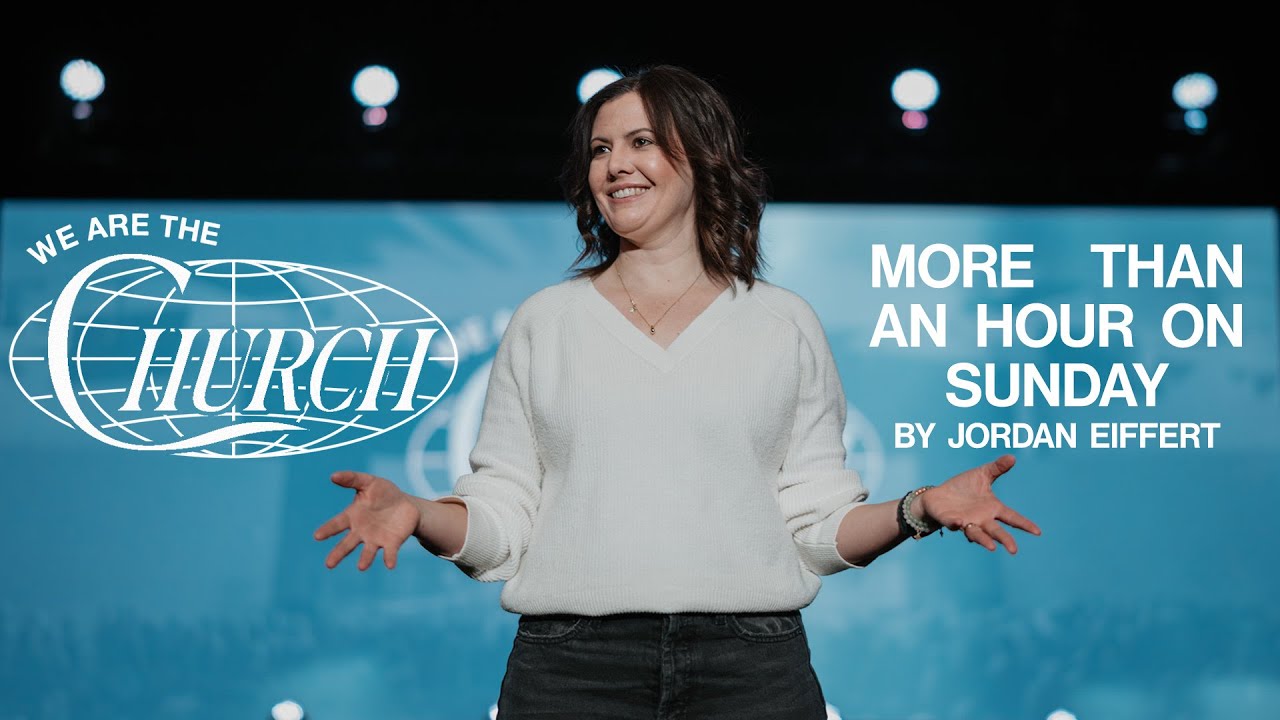
More Than An Hour On Sunday
Scripture
A call to move from attending church to being the church as a daily identity, built on three shifts: focus determines direction, choose what matters eternally over what's pressing temporarily, and build steady rhythms of worship, service, and prayer that last.
Transcript
We Are the Church
Church. So excited to see you all. You got out in this bitter cold that we’re not used to. And if you’re like me, you’re not looking forward to the more bitter cold coming. But we’ll take a little bit of winter any way we can get it, I guess. I hope you are listening. Over the next coming weeks and months, we have a ton that is gonna be happening here at church, and we want you to be a part of all of it. Those new membership classes, we are excited, we’re excited to be doing them in person. They’ll be happening at 9 a.m. They’ll be done and plenty of time for you to get in here for service. You will not miss service. But if you would like to learn more about the church, learn more about our mission and vision, you want to come to these classes. And so you can sign up in the Floyer or you can sign up on the website, and we’ll keep getting you details that way. But also just a little sneak ladies. Save the date, March 7th. We’re working hard already. More details are coming, but write it down. Don’t forget. Make time to be here.
We really believe that God is doing something special in the church right now, and in order for it to really really mean all it should, we want you to be a part of it. So we have a lot. I have too many notes. I’ve been trained by all of these guys, and I have way too much. And so let’s pray and then we’ll jump right in. Father, we come before you and we just thank you for your presence. Where your people gather, you are here. And this morning we turn our attention to you, to what you have to say. And Father, I just pray that you help me communicate what you need your people to hear. And we just thank you, Father, for everything that you are doing in us and through us and in our city. And we just believe that the best is yet to come. It’s in your name we pray. Amen.
Over the last couple of weeks, we started a series called We Are the Church. And Pastor David has mentioned this, but you see it when you come in, you’ve seen it on our new merchandise, and there’s only a few pieces left. So if you want it, you better go to the bookstore after service to get it. But it’s we are the church, this is our city. And this is more than just a January series. This is our theme for the year. And so you’re gonna be hearing this time and time again throughout the year from the pastors, from our leadership team. And there is a chance that you will get tired of hearing it. But the reason you’re gonna hear it over and over and over is because we want you to believe it. And we want you to live it. And we want you to start declaring it over the city that we are the church, but this is our city. This is where we go to change what we see, and we do that through the church.
More Than an Hour on Sunday
In week one, David talked to us about the church isn’t a place, it’s a people, and that God’s eyes are on his church, and he loves his church. And that was where we started, and it’s a foundation. And then last week, he gave us those practical steps to stop mooching, which is a word that I really like. And yes, it’s a real word. We all looked it up. Because we all said, is that real? Because we all use it like it’s real, but it is. And it was really talking about how to be participants in the church. That he was talking to us about what to pray, to attend faithfully, to give, to volunteer, to be champions of the church. And these are biblical truths and instructions that as members of his church, we need to walk out and we need to live.
But I think sometimes we get really excited about the words. It’s really easy to get excited when we say, we are the church and this is our city. We start declaring it. But sometimes we don’t exactly know how that plays out in our day-to-day life. We don’t exactly know how that looks when we leave the church building. And that’s what I want to talk to you about this morning. My title this morning is more than an hour on Sunday. We are the church more than an hour on Sunday.
You know, we are the church collectively, the group of us in this room, and people who aren’t even here today, we are the church. We don’t just go to church. We don’t just go to church. It’s so much more than that. It’s so much deeper than that. And so as I was preparing for this, it kept kind of coming up in me to share with you a little bit of my personal experience with the church. And Miss Shirley has helped me with this because I’m raising a PK, and I am a PK. And for those of you in the room who don’t know what a PK is, that’s a pastor’s kid. For those of you that don’t know, these are my parents, I’m a pastor’s kid. And if I’m honest, I never thought I’d be raising a pastor’s kid. And so I have a very unique perspective on the church. I have I’ve seen things in ways that other people may not necessarily see it.
Church Isn’t Just My Family’s Business
One of the things I remember from being a kid is that label, PK. People call you a PK. And I went to a Christian school, and at a Christian school, that meant two things. You are a goody two shoes, or you were a rebel. Those were your two options. There was no in between. There was this, you do all the good things, or you are always in trouble. It’s one of those two. It never fit me. It wasn’t who I was, it was just a label. It was just who my parents are. They happen to be pastors that makes me a pastor’s kid. That’s it’s pretty much that simple. But the reality of that was that came from people making assumptions about me. It wasn’t about the church. It was about things being put on me.
And so when I took real time to reflect on growing up in the church and being a PK, and let me make it clear, I love church, I love being a PK, I am exceedingly excited to raise a PK. It’s not a bad thing, but when I really took the time to examine my experience in church, here’s what I discovered, and here’s what I remembered. I remember that youth camp when I was in middle school, and a youth leader prayed over me in a room full of people, telling me that label wasn’t me. That changed my life because I didn’t have to carry it. And then my junior year in high school, we were having a conference here at church for youth. I came to this very altar, and I distinctly remember giving my life to the Lord for real. As a junior in high school, that moment I said, my life is yours, and I never looked back.
And then years later, I went to a church conference. Not here, not in this city. I was in a room full of people I didn’t know. They were church people, but I was in a room full of people I didn’t know, and it was the moment God called me to ministry. And you know, as I reflected on this, what came to mind was every significant moment in my walk with God happened in this room or with people who are the church. And you might be saying, but I have those moments at home, I do too. But those distinct moments happen because something special happens when the church gathers. His presence is here, and we want to be here, and this is what came to me. Church isn’t just my family’s business, it’s my father’s business. And that had to happen inside of me. It wasn’t up to them, it wasn’t up to my husband, it wasn’t up to my friends. Making a decision about being the church had to come from me. Inside of me, a personal decision between me and the father.
We Are the Church
But you know, the truth of that is it’s like that all sounds really good. It sounds really great. But keeping the why we come here week after week after week after week is actually really, really hard. It takes effort. We have to constantly be reminding ourselves that we don’t just go to church, we are the church. We don’t just go, we don’t just come, we actually are the church, so we have to stop compartmentalizing church over here and my life, the rest of my life over here. We have to start weaving into our lives this idea of actually being the church, it needs to be your DNA, it’s your identity, and we have got to stop, and as a person who keeps a calendar, and I know there’s plenty of people in this room who do not do that, and I do not understand you. How do your lives function without a calendar? But I know you exist, and that’s fine, but we have got to stop treating church like it’s just a line item on our calendar. It’s not. It’s not just a line item. It’s not just something we check off.
And some of you will understand that this. It’s not that thing on our list that we check off and then we get a little dopamine hit. Because we mark something off the list, we feel good. Sometimes I write stuff down on a list just to mark it off. Makes me happy. But church cannot become that. And it’s very, very, very easy for that to happen. You know, I think that when we think about church like it’s just a place we go, we lose its value. We forget its value. And I think when we really think about how we talk, the words that come out of our mouth about church, it’s really eye-opening. We say things like, what church do you go to? How’s church today? Are you going to church this weekend? No, those are perfectly fine questions. We’re all going to keep answering those questions. But think about it. It’s all about a place that we just go. It’s a place we visit. Are you going to Target? Yes. Of course. It’s the same. That’s how we talk about it. And so it’s very revealing to ourselves when we start thinking about how we talk about it, how we devalue it as just something that we have to do.
Being the Church is a Daily Calling
You know, the early church understood something about this that we forget. And it’s in Acts chapter 2, verse 46 and 47.
Every day they continue to meet together in the temple courts. They broke bread in their homes and ate together with glad and sincere hearts, praising God and enjoying the favor of all the people. The Lord added to their number daily those who were being saved.
You see, the early church understood something. They understood that the call of being the church was actually an ongoing thing. The very first thing is every day. Now that doesn’t mean we come here every day, but it means we are together, connected, knit together every day outside of these walls. Being the church. Being the church is a daily calling. It’s not a Sunday calling, it’s a daily calling. And we’ve got to start seeing it through the eyes that God, through the way that God intended it to be seen.
Colossians 3, verse 16 says,
Let the message of Christ dwell among you richly, as you teach and admonish one another with all wisdom through psalms, hymns, and songs from the Spirit, singing to God with gratitude in your hearts.
That phrase, dwell richly. Ask yourself this question. If someone were to follow you around for the week, would they see Christ’s message dwelling in you? Not just little bits and pieces, but actually dwelling in you. You know, your faith should make an influence, should make, should have a huge influence on your daily decisions. Your daily decisions. How people see you handle stress, and how people see you handle your success and even your struggles. Those are ways that people can see Christ dwelling in you because you handle it differently. It doesn’t mean you don’t have those same problems as other people. You absolutely do. They don’t just magically go away. But the difference between people who have Christ dwelling in them richly is that they handle it differently because they worship their creator. They don’t bear the burden in the same way.
And so the message of Christ really needs to be flowing naturally out of us at all times. How we handle things, what we do when no one’s watching, yes, that matters too. Yes, that matters too because the things we’re doing in secret do find their way out. It matters. How we treat people who can’t do anything for us in return. You know, those are the things that should naturally be flowing out of us. So if we’re gonna be the church and not just go to church, it’s gotta impact every single day of our lives if we really want to change the city. If we really believe that this is our city and we want to change it, then we’ve got to start letting that truth of being the church be so much bigger.
And I think that the first place that we can start is by examining how we really think about the church. How do we really think about it? Because there’s a big difference between having a church address, ours is 320 Waterfall Drive. That’s our address. There’s a big difference between that and having a church identity. They’re different. You know how to get here. You know how to get to church, right? And a lot of you in this room can tell me how long you’ve been coming here. And every single one of you can tell me where your seat is. If you’ve been coming here for any amount of time, you have your seat, and you get really upset when somebody sits in your seat and you think we’re shocked. It’s probably shocking to you that we know you have your seats, but we know where to look for you in the crowd. And there’s nothing wrong with that. We are happy you feel at home.
But you can tell us those kinds of things, right? What if I were to ask you how you’re involved in the life of the church? How you’re connecting with other believers. How you’re using the gifts that God gave you to build the church. A lot of us struggle to answer those questions. And the reason we struggle with it is because we just see the church as a place we go. And so many of us get stuck on what can the church do for me. What can church do for me? If I come, what are they gonna do for me? And they forget that they, meaning you, are the church. We are the church. It’s it’s not about us.
Focus Determines Your Direction
Just this past week I opened my phone, and somehow I’m getting these like messages from different groups of people in my Instagram, whatever. Anyways, one of them was from Craig Rochelle, and I don’t mind getting those because they’re very encouraging. But this week he said it like this God does not exist to serve us, we exist to glorify God. We are not spiritual consumers. We are spiritual contributors. The church does not exist for us, but we are the church and we exist for the world. That says it pretty clearly. But we still have to get in our hearts the significance of the church.
And this past week I came across some verses in Colossians 1, and I think it helps us see the bigger picture. And in many ways, this morning in worship, we were declaring this very this very thing. All things have been created through him and for him. And he is the head of the body, the church. For God was pleased to have all his fullness dwell in him, and through him to reconcile to himself all things, whether things on earth or things in heaven, by making peace through his blood shed on the cross.
These verses paint a really incredible picture of what God intended from creation to Jesus’ death to us being the church. You know, Paul is telling us that Jesus is the exact representation of the invisible God. Not just a good example, but the living God who created everything. Think about it. Everything that we see and experience exists and was created through him and for him. But think about this. From him, and he did something about it. He didn’t just leave us there. Through Jesus’ blood on the cross, he made peace between us and God and he redeemed us. He redeemed us. He restored us to back relationship with to having our relationship back with God. Are you seeing it? It’s a huge story. And we need to make that so deeply personal.
And then you ask the question, why? Why did he do all this? Of course, the simple answer and a very true answer is because he loves us, which he does. But it’s also because he wants us to be a part of something bigger than ourselves. His body, the church. Jesus is the head of the church. We are the body. We have work to do. We have work to do. When we understand that Jesus is both our creator and our redeemer, it changes everything, or it should about how we see ourselves and our purpose here on the earth. It should really change how we live our lives. We are not just random people who happen to find faith. God created us and he created us with a purpose, and we said yes. And so we’ve got to start walking in that. It’s not just one or the other. They’re linked together.
And just imagine how big our lives could be if we could think bigger than just what we can see in front of us. I think that that’s the part that we need to start working to get our identity as a part of the church to be bigger in our lives. So when the church is part of your identity, you start thinking a little bit more like this. You don’t just attend worship, you bring worship. You don’t just show up when it’s convenient, you have a part to play, and you don’t take up space in the building, you’re actually making space for people to come in. See, you’re you’re not just a participant, you are active, but it’s not something that we’re gonna do, we’re gonna say to you every week. It’s something that’s going on for you inside of you. It’s a personal thing, and so how do we begin to take this big, beautiful reality? This big, beautiful story and way of life, and really start to live it out every single day.
I really felt like the Holy Spirit brought this to me this week, and it’s it requires that we shift our focus. We’ve got to shift our focus. For me, was something that God gave me back in 2021. It was right as we were coming out of the thick of the pandemic, and for all of us, during that time, lives changed. Our daily lives really changed. They looked very, very, very different. And for me, I was searching for a way to kind of get the daily life that I had once known back to being a place where I was healthy in spirit, soul, body, all of it. And I what I was really seeking for was I felt like I was just kind of in a rut. And I was in like a valley, and I wanted out so bad. And I really sought the Lord, and you know, he answered. And he didn’t answer with like this really long here’s what you do or booming voice. He just dropped the word focus into my heart.
And you might be wondering, how does that apply to church? Well, one of the biggest things that changed during the pandemic was church. Church changed. The world and the world systems worked really, really hard to stop the gathering of people. And during that season, we were doing, everybody was doing the best that they could with what was in front of us. But when you’re out of the routine that you’re used to, when you’re out of the things that are normal, your focus shifts. We lost focus to the big reason for the church.
And so, with the rest of the time we have left, I’m gonna I’m gonna break down this word focus and how God developed it in me and how it applies to us being the church, to being the church. And this is, I’ll tell you this this word focus, it’s everywhere. David could probably tell you, it’s all over our house. In like every nook and cranny. I have it written down because God’s not done developing it in me. It’s an ongoing thing. It’s a daily thing, it’s a weekly thing, it’s a monthly thing, and it will apply to more than just how you see yourself in the church. It can apply to all sorts of places in your life.
But the first thing is when it comes to focus, is focus determines your direction. Focus determines your direction. So if we’re gonna be the church and not just go to church, we have to start with where we’re putting our focus. Because your focus will absolutely 110% determine which direction you’re gonna go in. And let’s be honest with ourselves. It’s gonna require you to be honest. We have a focus problem. We do have a focus problem. We all do. Okay, I walk into rooms all the time and can’t remember why I went in there. And it’s really frustrating. And it’s not just because I’m getting older, it’s because I’m distracted. It’s because I started thinking about 15 other things on my way to whatever I was doing.
Or, and you know, this is usually an accusation that guys get to girls, but I do this to David all the time. Your spouse is talking and you’re doing something else, and then they’re like, Did you hear me? Yeah, totally. Nah, I didn’t. I was doing something else. Happens to me a lot, it’s usually when I’m watching a show. But do you see that? It’s just a focus problem. We’re we’re so divided in different things. Alright, let’s think about this when you’re in church. Might sting a little. You’re singing a worship song like we were this morning. Holy, holy, oh, I need milk. Holy God, you’re so great. Oh, we need cheese sticks. Am I the only one? I know it happens. Have us all of us. Or you’re reading your Bible, and then all of a sudden you’re like, you’ve planned your whole day, but your Bible’s still open, or you’re still listening to the Bible, but you’ve planned your whole day. Guilty. Totally distracted.
Or maybe you’re praying, but really all you’re doing is marking things off that you know you need to be praying for, but you’re not connecting. Or right now you’re sitting in church and you’re scrolling social media. Oops. Oops. Happens because it’s because we have a focus problem. We are so focused on so many different things, and I am just as guilty as anyone else with this. We all are. And that focus should be the king. Now, why we have a focus problem is because there are so many demands around us. We have so many demands coming at us, and that and all those demands are not bad. So hear me when I say this. I understand the demands coming at you, and they are not all bad. In fact, many of them are important. Many of them are important. But even those important things cannot be the only thing. And it can’t be the thing that’s determining your direction.
Here’s just a few things that happen. Sports schedules demand our weekends. Work deadlines demand our energy. This is a big one, I think. Social media demands our thoughts. It’s not doing anything other than consuming what you’re thinking about all the time. And even good things like our families. Even those good things, they demand our time. And so just because something demands your attention does not mean it deserves your absolute focus. And when the church is just another demand on your life, it’s not your identity. It’s just another thing. We’ve lost our direction. We need to put our attention on one thing and let that one thing order these motorized scooters. And we bought them so that we could ride around the neighborhood with our daughter, and we’re pretty close to the nature center, so we can go down there. And we thought, well, this will be really fun.
Here’s the thing that I forgot. I haven’t been on anything in with just two wheels in like a really long time. I don’t think I’ve ridden a bike since I was probably 12. And so the first few times I was really nervous. And anytime I would like look back to check for a car, you know what happened? The bike would wobble. And then I’d wobble more because I got nervous from the wobble. But you know what happened is I just took my attention off the thing that was in front of me. If I stayed focused on where we were going, I stayed, I stayed straight. That doesn’t happen to me anymore, by the way. It really is like riding a bike. I do just fine now.
Proverbs chapter 4, verse 25 through 27 says,
Let your eyes look straight ahead. Fix your gaze directly before you. Give careful thoughts to the paths for your feet and be steadfast in all your ways. Do not turn to the right or the left. Keep your foot from evil.
So let your eyes look straight ahead. Fix your gaze. You know what this says to me? Pay attention. Pay attention. We need to play pay much closer attention to what’s getting our focus. Because when our gaze is fixed on being the church and not just attending, we maintain our spiritual direction better. It helps us with our spiritual direction.
And so, how do we keep church as a focus? The way that it has come to work in my life is I have things in my life that I call immovable. They are my immovables. So, what are my immovables? My first, well, they don’t really go to order, they’re just they’re things. My personal relationship with Jesus. It’s super important to me, and it is immovable. I write it on my calendar every day to have time with Jesus. And sometimes it’s five minutes, but I make it a point to have that time to connect with the Father. I make it a point. The other is my family. My sweet little family. Grace is seven, going on 22. And she, I don’t want to miss things. I don’t want to miss things. And so if it’s gonna take time away from that, a lot of times my answer will have to be no. Because it’s immovable. Making sure our family is strong and healthy, it’s immovable. And the last one is the church. And you might say, why? It’s because church is not just an activity. It’s who I am. So it doesn’t move. It stays and it stays steady.
If church remains optional for you, it will always remain very low on the list. The world systems, and by that I mean non-believers. They are never going to respect your spiritual life or the spiritual life of your family. They don’t understand it. So they’re not going to respect it. It’s going to be up to you to make that decision. God will require, God will not require it of you. That’s the truth. David said it in the first week. He’s a gentleman. He’s not going to make demands. He’s not going to say, you show up to my house or. And the truth is we’re not going to do that either. We need to see that the gathering is an invitation from God Himself. And so it’s much bigger than a demand. It’s an invitation from your creator, your redeemer, your savior. That’s why we come together.
And so I encourage you this week, ask God, take some time. Get intimate with the Father and ask the Holy Spirit to show you what’s actually, getting your focus. Because whatever you put your eyes on is the direction that you’re actually going to go. When being the church is your identity, it becomes an immovable part of who we are. Not just something we try to fit in when it’s convenient. Being the church gets our focus and we keep going straight.
Choose What Matters Over What’s Pressing
So that’s the big piece. Number two is choose what matters over what’s pressing. So after our focus has been shifted to the right thing, God will tell take us to the next step. And it’s gonna be a little bit of a different approach. It might sound the same at first, but it is different. So choose what matters over what’s pressing. To me, this from my study, it came to the word intentional. I always want to do things on purpose for a purpose. I don’t want to just do things to do things. I’m just I don’t like to do that. I just want to be, I want to use my time intentionally.
And so when we’re talking about the church, and instead of just going being, it requires that we’re very intentional. It really does. And you’ve got to ask yourself this question. What are you attending to? What are you attending to? If you don’t know what you’re attending to, look at your calendar, see what’s on there, look at your bank account, see where you’re spending all your money. Those are the things that you’re attending to. Those are the things that are really getting your attention.
And so before I go any further, let’s just let’s make a distinction. Focus determines your direction, and attention determines your priorities. Okay, they’re two different things. So focus is the intentional and sustainable direction toward a specific goal. So you’re being very intentional with this big picture, and it’s not gonna change very much, it’s not gonna change much, but your attention is about where your mind is and where it’s being directed at any moment. So when you what’s the first thing you check when you wake up in the morning? What’s the last thing you’re thinking about when you go to sleep? Those are the things that are actually getting your attention. That’s that’s what’s getting your full attention.
And so these are hard questions to ask yourself. But are we more concerned with our weekend plans than our church families’ needs? Do we put more effort into our social media presence than our presence in God’s house? Are we more committed to our kids and their schedules than we are to their spiritual growth in the church and at home? We have to ask some of these really, really hard questions. And trust me, I understand they’re hard. But we’re talking about eternal things versus temporary things. It’s a big deal.
Many of us know this story, we know it well. Matthew 7, 24, 24 through 27.
Therefore, everyone who hears these words of mine and puts them into practice is like a wise man who built his house on the rock. The rain came down, the streams rose, and the winds blew and beat against the house. Yet it did not fall because it had its foundation on the rock. But everyone who hears these words of mine and does not put them into practice is like a foolish man who built his house on the sand. The rain came down, streams rose, winds blew, and beat against the house, and it fell with a great crash.
This is a familiar story, but when we attach our thinking about this to what’s getting our focus and what’s what our priorities are, then we might start to realize how shaky our house really is. We might start to see that our house is a little more shaky than we thought it was. Some of us are doing a really good job of constructing a beautiful house on the inside or on the outside, but the inside is not strong. And so when the struggles come, it takes you out. You’re not strong, you’re not stable because we’re not building our actual lives on the things of God. You can attend to the things that concern you, or you can turn your attention to the things that concern God, but you can’t do both.
And here’s the beautiful thing. When you turn your attention to the things that concern God, he takes care of your concerns. That’s the true order. It’s not that we forget about our concerns, is that we go first to the person who can fix it in the first place. We can’t. When we just attend when we just attend church, we’re checking boxes. That’s all we’re doing. But when we attend to being the church, we’re changing our lives.
Got a few examples. Attending the church is about showing up. So if you just come to church, that’s all it’s about. Attending to being the church is about showing care. Attending means hearing the announcements, hearing about a need, attending to it means being the answer to that need. Attending to attending means making sure your kids get to church. It’s a good one. But attending to is making sure your kids see Jesus in you at church. It’s much bigger. Attending means critiquing the sermon. Attending to means asking, God, what do you want me to learn? They’re different. They’re a heart posture.
God didn’t save us just to come sit in church. He did not. He I know it’s hard to hear that it’s like, oh, everybody always wants us to be at church, wants us to be at church. We want you to be a church because it’s a big deal that he saved us. He didn’t save us just so that we would come sit in church. Being the church means intentionally choosing to attend to what matters eternally, not what’s pressing temporarily. It means building our lives around God’s priorities, not just fitting God into our priorities. We’ve got to focus and put our attention on what really matters.
Build Rhythms That Last
Number three, this is our last one this morning. We’re wrapping up. Build rhythms that last. This is a this for me is probably the most deeply personal because I shape my lives or my life around rhythms and healthy rhythms. And what that means for me is I’m always looking for ways for my life to naturally flow. Less resistance, an easy flow to it. And it’s hard. It’s hard. And it rem it takes constant change, constant shifting. But God showed me this as I was studying the word focus. He gave me the word focus. He gave me the word intentional. And then he gave me the word steady, remaining fixed on the goal, but with balance. But with balance. But God often calls us to reset and to shift. And so that means we’ll have to do the work. And it will take time.
My personality is I’m a completionist. If I start a project, I want to finish it, and I want to finish it right now. I don’t like things left undone. We start a project and we can’t get back to it for like another week or two. I am dying. David knows this about me. I cannot stand leaving something undone. It drives me completely insane in my mind. Like if I started, it used to be for me if I started a puzzle, I started something, I wouldn’t stop until it was done. But God started to show me that I needed a steady pace. I don’t actually have to finish it right then. I don’t. Everything that we do, if we really want it to change our lives, will take steady effort. Steady effort.
James chapter 1, verse 4 says,
Let perseverance finish its work so that you may be mature and complete, not lacking anything.
That word finish means it’s a process. It’s gonna take time. But when we stay steady, when we keep showing up, we start to maintain something that can actually last. It takes effort day after day after day, yes, but it’s a balance, it’s learning, and that’s where maturity starts to grow. It’s in that steady pace. But I really did enjoy it. It was good for my mind, it was good for my body. But there was nothing quite like, and runners will know this when you hit your stride. When you just get in that routine and that place that’s just perfect for you. When that happened to me, I could just keep going. I didn’t want to stop. But it was hard to find. And when you can find it, you really don’t ever want to stop. That’s like what finding your rhythm with God is. It takes time, but when you set when you find it and you really settle into it, you never want it to stop. And everything else kind of moves out of its way.
A sustainable spiritual rhythm looks like this. Daily moments with God become as natural as breathing. Serving others becomes our regular heartbeat. Giving becomes our consistent response. Prayer for our church family becomes our steady pulse. A lot of us, we find ourselves drifting in and out of church involvement because it’s based on how we feel. It’s based on our feeling, based on what’s convenient. But when the church becomes our true identity, it will create a completely different rhythm to your life. One that’s sustainable and one that is pleasing to the Father.
Now you are the body of Christ, and each one of you is a part of it. Please notice that it does not say you attend the body or you visit the body. If your heart stopped pumping and said, nah, I’ll do that next week. Or if your lungs decide they don’t want to breathe anymore. Doesn’t work. The body doesn’t function. And that’s true of each one of us. We have a part, a vital part to play in the church, which is the body of Christ. And the role that you have to play when you pull yourselves out means we’re missing something. God wants to work through you, through each one of us. David talked to us about those things last week.
And when the church becomes our identity, our rhythm begins to look like what David talked to us about. We show up consistently, not just when it’s convenient. We serve steadily, not just when we feel inspired by something. We give regularly. We pray for the church. We pray, not just for the church. We play pray for the church family. The family, the people in it daily, not just during crisis. This kind of rhythm is always going, isn’t always going to feel great. I won’t lie to you, it’s not. Some Sundays, you’ll be tired. I promise. Your physical body is still your physical body. Some days serving will be really, really hard. It’ll feel heavy, it’ll feel difficult. But when you show up, you’re serving the body. You’re helping someone else. But identity isn’t, our identity is not about our feelings. Who we are should never be dictated, dictated by our feelings. It’s about faithfulness. That’s what it’s really about.
A healthy church, a healthy bride of Christ is filled with people who see themselves as the church. It’s their identity, it’s their DNA. It’s who we are. And so we started this morning talking about being more than just people who go to church for an hour. As God’s and God has given us three ways to make that real. I copied David and we have a closing statement. The first is focus determines your direction. Where your eyes go, that’s where you’ll end up. When we fix our eyes on Jesus and make church one of our immovables, everything else starts to line up. Second, choose what matters over what’s pressing. It’s about being intentional with what we’re attending to. You can attend church your whole life and never attend to being the church. The difference shows up in how we’re building our lives on the rock of what matters eternally, not on the sand of what’s pressing temporarily. Third, build rhythms that last. When church becomes our identity, it changes our rhythm. God isn’t asking for performing for perfect performance. When we make building the church our identity, instead of just our activity, we stop treating church like a building and start believing like we’re the body that Christ designed us to be.
Challenging. But it’s my encouragement to you that maybe God is trying to invite us into something that’s bigger than ourselves and our comforts. He’s inviting us, like really think about this. God is inviting us to be the church, to be his hands and feet on the earth. And we need to start seeing it for what it really is. Because it’s beautiful, and it’s a gift that he would entrust something this big to us. So, in the places that it has caused discomfort, instead of being upset or being overwhelmed by it, go home and say, Father, what would you have me do about this? What would you have me do about this? Because I want to be your church in every way.
Let’s pray. Father, I just ask this morning that you help us as we leave this building keep our focus on you. That we put our attention to the things that matter for all eternity. And that if things need to shift and things need to shame change, that you would help us find that supernatural rhythm that you have for our lives so that we can be participants in building your kingdom. Father, let this be a moment for many of us where we change our focus to not just being church attenders, but to attending to the church and attending to the body. Help us continue to do what you need us to do and open our eyes to the many opportunities before us every single day. We just thank you, Father, that you would call us to such an honorable place of working with you to build your church and to see change in our city. It’s in Jesus’ name we pray. Amen.
Thank you so much, church for being here. I just want to remind you that next Sunday at five o’clock, we are having a volunteer team night. And if you’re a volunteer and you need child care, we do have child care available, but it would really help us if you need that child care to let your department leader know so that we have enough help for that event. So we look forward to seeing you next Sunday. We hope you’ll come on Tuesday and be a part of the winter series that has begun. We’ll see you next week. Thank you for being here.